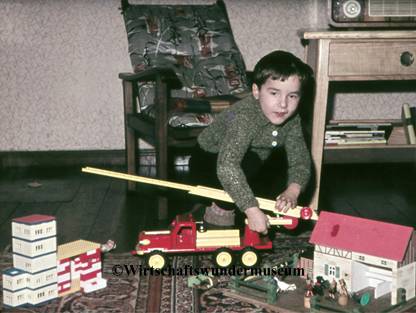
"Grossblock-Baukasten" from East Germany
Industrialized Housing in the GDR
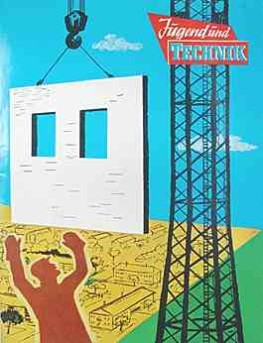
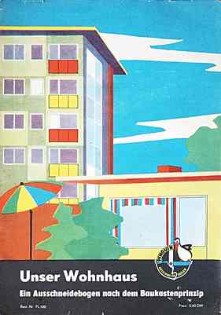
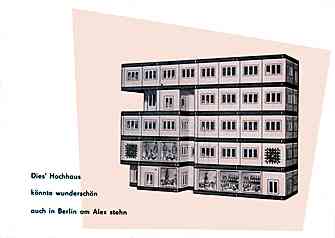
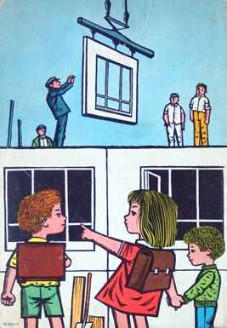
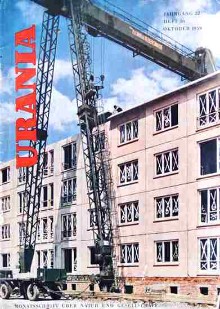
To tackle the severe housing shortage, East Germany pushed to industrialize its construction industry in the late 1950s through prefabricated assembly methods. By using hoists and cranes to assemble concrete elements mass-produced in specialized factories, new apartments could be built significantly faster and at a fraction of the cost compared to traditional brick-and-mortar techniques. While experiments with this basic process had been ongoing since 1910—culminating in Berlin-Johannisthal’s first prefabricated apartment building in 1953—early structures hid their origins. The seams between individual panels were plastered over, and buildings were adorned with decorative flourishes. However, widespread adoption was initially delayed because the GDR’s First Five-Year Plan of 1950 prioritized industrial expansion above all else.
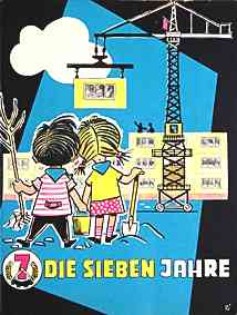
Housing only became a primary focus with the Seven-Year Plan in 1959. As the ruling party’s official newspaper Neues Deutschland announced: “To satisfy the immense demand for housing, a building program is planned that includes the construction of at least 772,000 apartments by 1965,” boldly predicting that “prefabricated assembly will become the dominant construction method in our Republic.” Authors of the contemporary book Our World of Tomorrow declared that “The end of all housing shortages is in sight! Rolling mills 120 meters long are literally ‘baking’ concrete and gypsum panels on a assembly-line basis.”
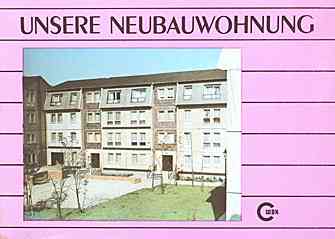
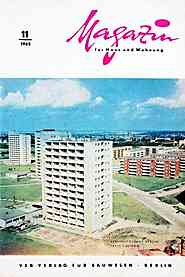
The key to cost-effective production was standardization (“Typung”), overseen by the state enterprise VEB Typenprojektierung, which established uniform specifications for shape, size, and function. The methods varied by panel size and weight, ranging from “large block” construction (up to 2 square meters and 750 kg) to full “Plattenbau” panel construction (up to 12 square meters and 12 metric tons). During assembly, wall panels were joined with mortar, while ceiling elements were additionally welded together. As the contemporary East German textbook Der Montagebau instructed: “To ensure favorable conditions for series production, no fewer than 250 apartments in cities and no fewer than 20 in villages should be built at a single site.” Tucked away in that same textbook was a small, unassuming sentence that reveals the root cause of what would become the format’s defining flaw over the coming decades—its striking aesthetic monotony: “The standardized design should be created using as few different building components as possible.”
Modern Large-Block Construction Set
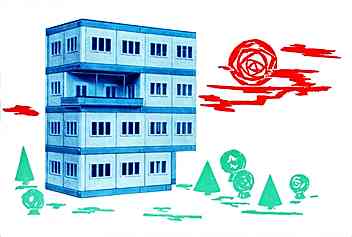
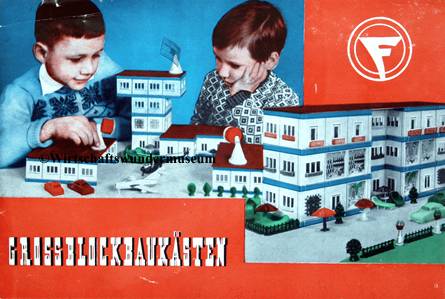
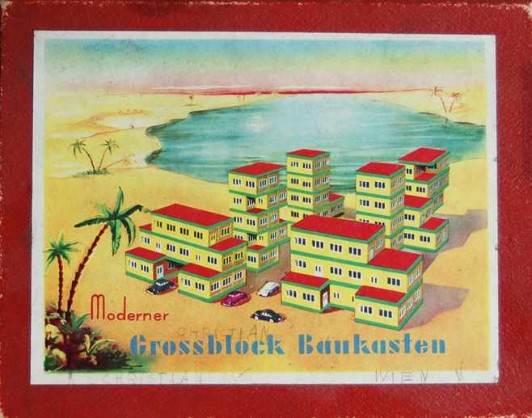
By the close of the 1950s, the “large block” (Großblock) method had become the most widespread construction technique, making it a natural choice for toy manufacturers to emulate. A modular construction set produced around 1958 by Manfred Schägner in Tabarz (Thuringian Forest) under the name “Moderner Grossblock Baukasten” initially raises eyebrows with its cover illustration: the modern large-block buildings are oddly situated alongside a lake in the middle of a desert landscape.
What appears bizarre at first glance becomes clearer when looking into the futuristic visions popular in books and magazines of the era, which framed reclaiming the desert as one of humanity’s greatest technical challenges: “Even the deserts will feature human dwellings—and not just in oases or modest villages. In part, through large-scale climate modification… and irrigation powered by atomic energy, they will be transformed into fertile gardens and populated accordingly.” The cover illustration thus represents the peak of contemporary faith in progress, with a large-block housing development right at its center.
It was not just real-world construction methods that were evolving; the toy industry was changing too. The components inside the cardboard box were made of plastic (commonly referred to in the GDR under the collective term Plast), utilizing what was still a very modern material at the time. Another parallel to the real world is evident: just like its real-life counterpart, Schägner’s toy design aimed to keep the number of different building components to a minimum.
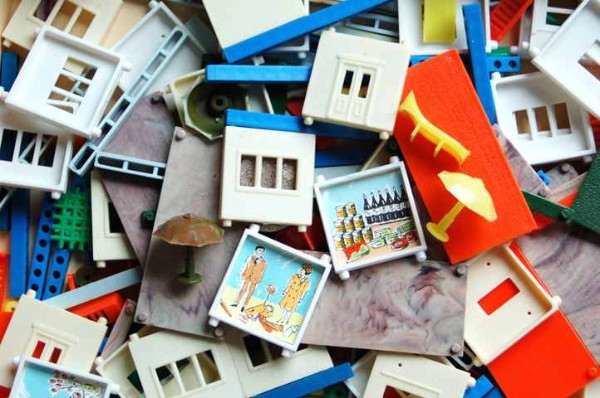
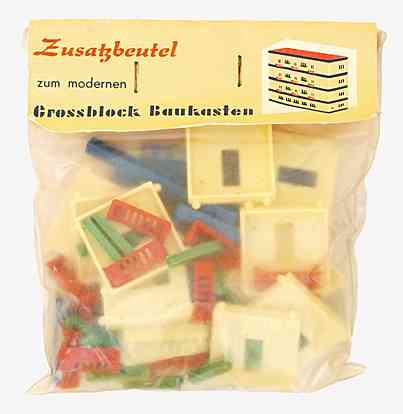
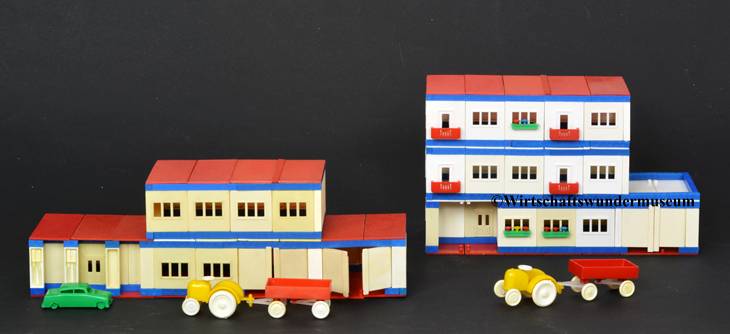
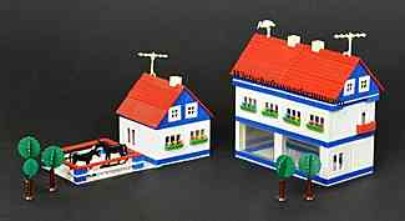
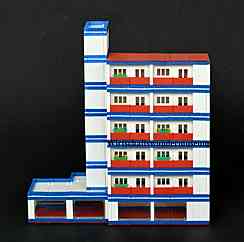
Alongside red roof pieces, the set contained only three types of white wall panels—identical in size, but varied in design as windows, doors, and solid panels. These wall pieces and roofs featured pegs that snapped into corresponding holes in blue connecting strips. Later on, the system was expanded with additional connectors (“small and large bridges”) in various lengths and “roof strips” in different sizes. This allowed for greater building versatility and better structural stability, as elements could now be laid in staggered patterns. An additionally purchased “expansion bag for the modern large-block construction set” included flower boxes that could be clipped onto windows, as well as balconies with small pegs designed to press into matching holes in special door elements.
In 1960, Manfred Schägner relocated to West Germany; what became of his manufacturing machinery remains unknown. However, because the construction sets were already well established in the market, two independent companies in neighboring Waltershausen decided to try their luck starting around 1961, producing faithful replicas using what appear to have been their own newly built machinery.
The Evolution of the “Grossblock” Toy Set
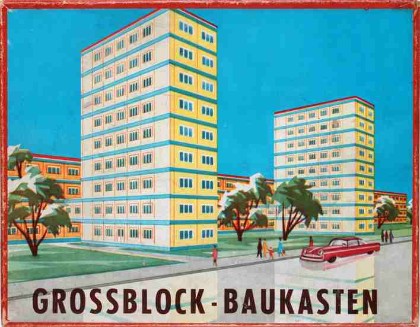
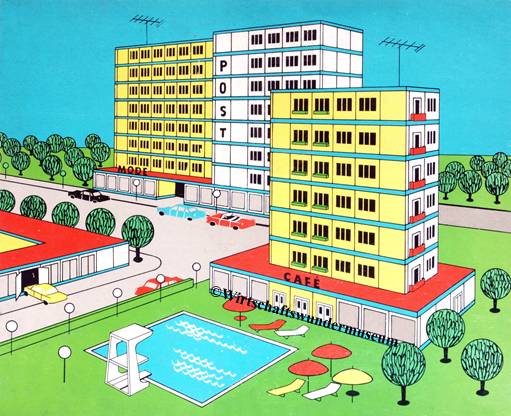
The company Anni Friedrich, Kunststofferzeugnisse, took over as the manufacturer of “Der moderne Grossblock – Baukasten” (“A modern construction set – educational and entertaining”), initially selling off Schägner’s remaining stock under its own name. Friedrich soon introduced its own newly designed box, featuring a cover illustration far more realistic than the earlier “desert city”—even if the oversized American cruiser parked in front of the buildings was a rather rare sight on East German roads…
By 1964 at the latest, the construction sets underwent a comprehensive redesign. “The building components before you are the newest and most modern of their kind,” boasted the included instruction manual. “With them, you can build apartment blocks in the style of our time.”
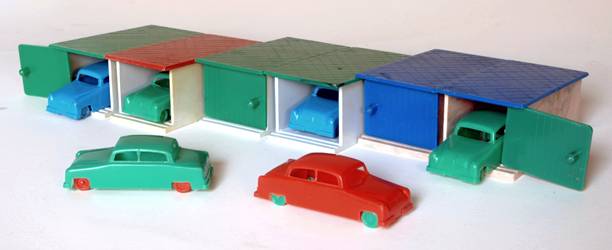
While the core building blocks remained the same, the colors of the roof elements and connecting strips were now varied. The range of accessories was also expanded significantly: with garages complete with matching cars, street lamps, fences, sunshades, deck chairs, and various other details, children could create far more diverse play scenarios than before. The box cover was once again updated, remaining unchanged until the end of Friedrich’s Grossblock production, though the colors of the boxes themselves frequently varied—whether by deliberate sales strategy or due to material supply shortages remains unknown.
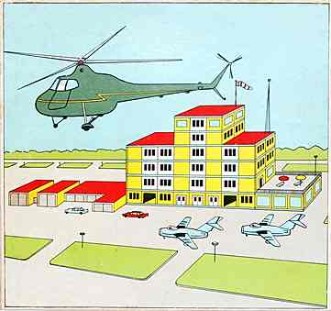
The standout feature among the new additions was a set of tiny pictures depicting various store displays. These were pasted onto the back of solid wall panels, allowing them to be installed as miniature shop windows. A 1967 promotional brochure advertised an upcoming “Airport” plastic construction set, but just a year later, the business was absorbed into the state-owned VEB Preßwerk Tambach in Tambach-Dietharz, bringing the company’s era to an end.
The Alternative “Grossblock” Producer: Karl Ribarsch
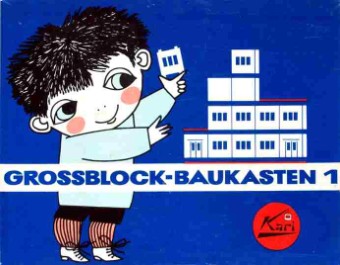
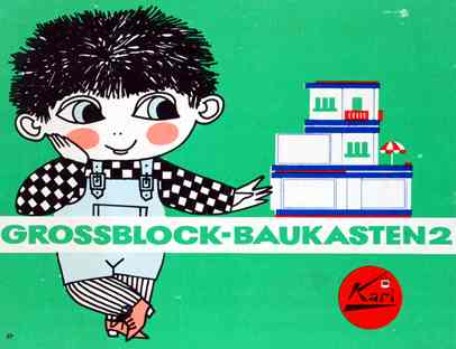
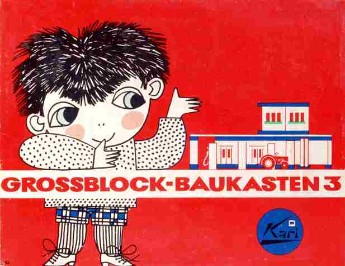
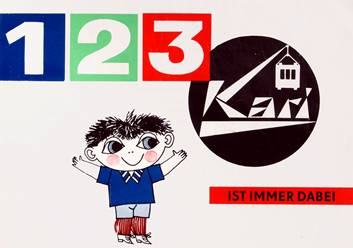
The other manufacturer reproducing the Tabarz set was Karl Ribarsch in Waltershausen. His product relied on the exact same base components, but he sought to stand out from the competition through unconventional packaging. Instead of traditional, realistic architectural drawings, his boxes featured a clever, cheeky little character illustrated by R. and Eleonore Partzsch. Inside the instruction booklet—a multi-page, visually creative guide—this spunky character explained the building possibilities in upbeat, period-typical rhymes: “Image 1 shows a garage to view—with real working doors, built just for you. A car drives right out, oh my, what a sight—and you can build this car, if you get it right!”
Ribarsch offered his construction set in three distinct versions:
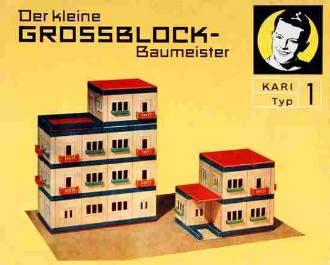
- Set 1: Contained components for a standard Grossblock house.
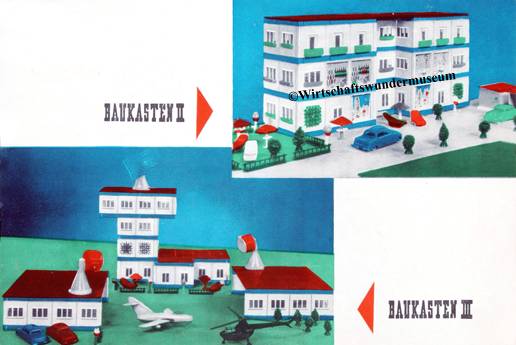
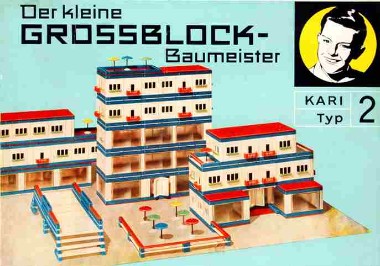
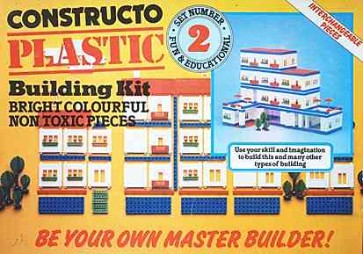
- Set 2: Expanded the possibilities into a “high-rise, hotel, or café” by adding extra parts alongside specialized pieces like revolving doors, large panoramic windows, and staircases.
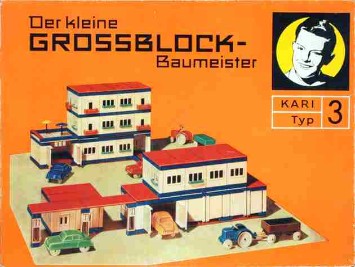
- Set 3: Featured specialized components for building large gas stations, including garage doors, a toy car, and a tractor with a trailer.
By 1967 at the latest, a visual redesign replaced the rhyming boy on the box lids with illustrations of the completed structures themselves. Although a cartoon boy still smiled down from the top-right corner, he lacked the mischief of his predecessor, embodying instead the image of a well-behaved, somewhat dull model child.
The product lineup expanded to five distinct sets:
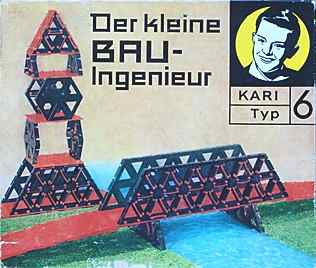
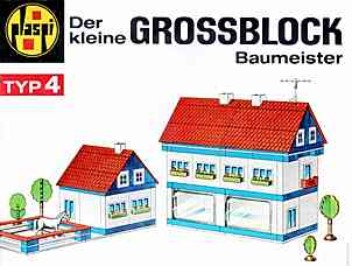
- Type 4: Aimed at “industrial building of smaller rural structures,” complete with triangular gables, lattice windows, and roof tiles.
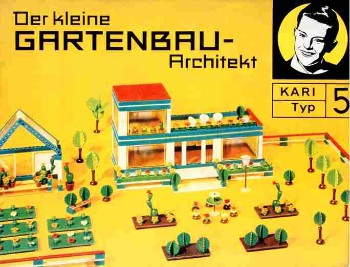
- “Kari Type 5” (The Little Landscape Architect): Allowed children to assemble “a small horticultural exhibition or a café garden with a flower meadow.”
- Expansion Bags: Available for extra customization, such as the matching “Kari Bag: The Little Master Gardener” for Type 5.
Perhaps the most significant change was renaming the line from “Grossblock – Baukasten” to “Der kleine Grossblock – Baumeister” (The Little Large-Block Master Builder). Thanks to its widespread popularity, this title remains the definitive term today for East German building sets of this design.
Around 1969, the box design became even more colorful. While the cover illustrations remained identical, they were now set against vibrant, bold background colors matching the boxes themselves. Translations into Polish, French, and English (“Large Block Master Builder”) printed on the box flaps reflect the GDR’s strong export rates—not only to fellow socialist nations, but to Western capitalist markets as well.
The Transition to plaspi and the End of the Line
In 1972, the Karl Ribarsch KG was nationalized and renamed as the “Waltershausen branch” of the state-owned enterprise VEB Chemisch-technische Erzeugnisse Gotha. During a transitional phase, the old “Kari” logo on the packaging was simply swapped out for the new brand name, plaspi.
Shortly thereafter, the box sets were completely redesigned by P.H. Becker’s “Studio for Commercial Graphics” (Atelier für Gebrauchsgraphik) in Leipzig. While the French translation on the packaging was dropped, Russian and Hungarian were added—reflecting shifts in export priorities.
As dated quality control slips confirm, the “Grossblock” sets (Types 1 through 5) continued to be manufactured in this new plaspi design, virtually unchanged, until at least April 1990.
While no official records exist of a formal collaboration between Karl Ribarsch and Anni Friedrich during the 1960s, physical evidence suggests a connection: early Friedrich boxes bear stamps with the letters KRW (likely standing for Karl Ribarsch Waltershausen), and Friedrich’s original slogan—“A modern toy – educational and entertaining”—later reappeared on the Kari building sets as well.
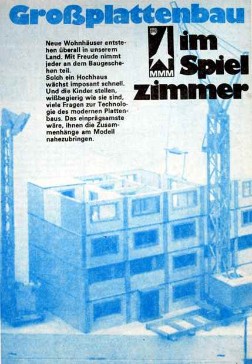
“Large Panel Construction in the Playroom”
“New apartment buildings are shooting up all across our country. Everyone enthusiastically follows the construction progress. High-rises grow with impressive speed, and curious children ask endless questions about modern panel building technology. The most effective way to help them understand it is through a hands-on model.” (From the East German magazine practic)
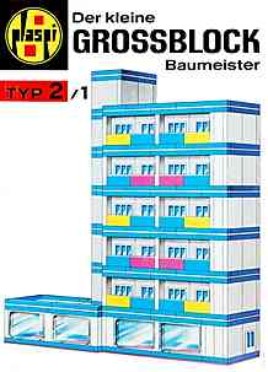
The Little Large-Block Master Builder Type 2/1 – “Perhaps you, little builder, are already the happy owner of the Plaspi Type 1 Grossblock set, in which case you already have some building practice. Now, this set, Plaspi Type 2, will open up brand-new possibilities for you. You can construct apartment blocks, high-rises, hotels, commercial buildings, bridges, and much more—all in the modern style of our era.” – “Build higher with Plaspi Type 2!”
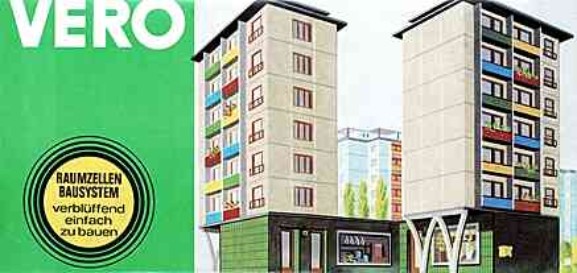
“The New Modular Space Element Construction Method”
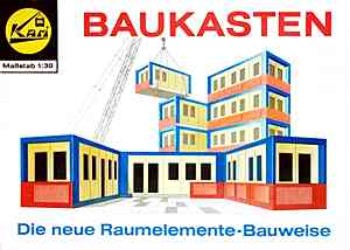
In 1971, the Karl Ribarsch company introduced a new development to the market: “Die neue Raumelemente-Bauweise” (The New Modular Space Element Construction Method). The accompanying manual clearly outlined the purpose, scope, and real-world connection of the building set:
“Dear young builder! In the capital, in major cities, and across industrial centers, we eagerly watch the construction of new, modern apartments, high-rises, cultural centers, and entire city districts. This reality places ever-increasing demands on the building industry, forcing it to shift labor directly into prefabrication plants.”
A prefabricated “space element” produced in these factories consisted of a frame and several wall panels fitted directly inside. “For instance, a fully pre-assembled ‘kitchen-bathroom’ module, complete with all fixtures, can be transported straight to the construction site.”
This process could be replicated in the playroom using the Kari building set, which earned high praise in the East German trade journal Spielzeug von heute (Toys Today). Awarded the certificate “For exemplary developments in the field of toy production,” the set was collaboratively developed by construction experts, educators, and industrial designers:
“The building set received this prestigious award from the socialist youth organization because it provides both boys and girls with a wide-ranging opportunity to engage with modern construction techniques.”
Involved in the development was a team from the Dresden University of Technology, which originally designed a space-element kit for architectural planning purposes. Under contract, the Karl Ribarsch company adapted the core design and oversaw its transformation into a commercial toy.
By utilizing a 1:30 scale, the set seamlessly integrated with 1:30 scale toy vehicles produced by VEB Plast- und Holzspielwarenwerke Steinach—themselves created as part of the GDR’s broader standardization efforts. As a result, the set was considered “particularly suitable for use in after-school care centers, children’s homes, and working groups of the ‘Ernst Thälmann’ Pioneer Organization… Purposeful play guides children toward occupations vital to the national economy.”
The West German Mystery: Rex Plastik GmbH
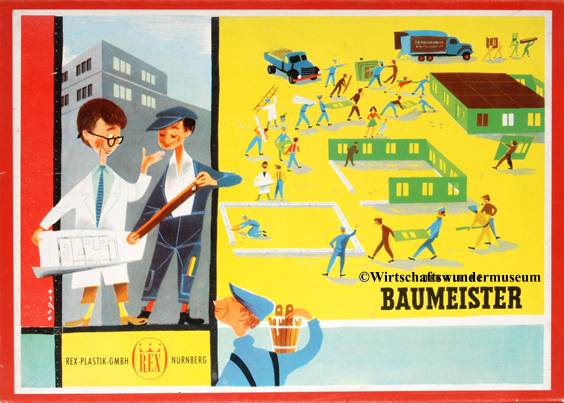
Things become entirely hazy when examining a fourth “Grossblock” construction set—this one originating from West Germany and predating all the others. As early as 1955, Rex Plastik GmbH from Nuremberg, a subsidiary of tin toy manufacturer Karl Arnold under the management of his son-in-law Max Ernst, presented a set titled “Der kleine Baumeister” (The Little Master Builder) at the Nuremberg Toy Fair, featuring the very same familiar core components.
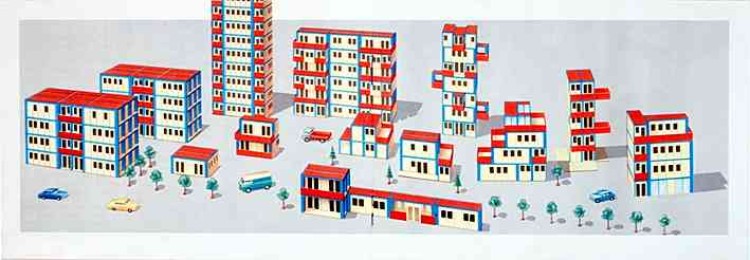
The high quality of the plastic—which, unlike its East German counterparts, shows not the slightest sign of yellowing even after more than half a century—strongly points to manufacturing in the Federal Republic. However, because large-block construction of this kind was rather uncommon in West Germany at the time, the trail of clues leads back toward East Germany once again.
While the exact connections of the era can unfortunately no longer be definitively resolved, various clues strongly suggest that the concept for the Rex construction set may have involved East-West contacts—agreements that, back then as much as today, nobody could, would, or wished to shout from the rooftops…
The “ROCASO” Building System
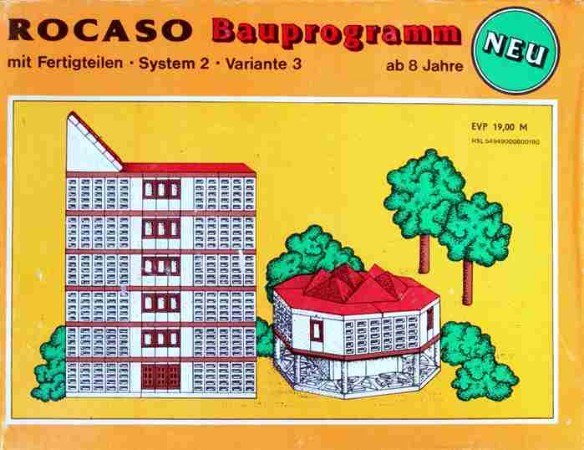
Produced in the GDR around 1970, the “ROCASO” building program was a modular construction system featuring prefabricated gypsum (plaster) components that were glued together to assemble miniature structures. Manufactured by the state-owned enterprise VEB Harzer Gipswerke Rottleberrode, the kit allowed young builders to construct detailed miniature buildings, closely mirroring real-world prefabricated homes.