Vintage Paper Dolls
©Text / Photos: Jörg Bohn / VG WORT Wissenschaft
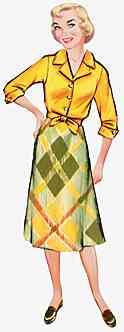
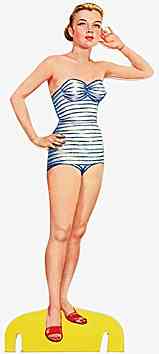
While paper dress-up dolls from the 19th and early 20th centuries are highly sought-after antique paper collectibles, more recent items have so far only caught the attention of a few dedicated enthusiasts here in Germany. Yet, American “Modern Paper Dolls” in particular prove to be both charming and meaningful witnesses to the “American Way of Life”—practically waiting to be discovered by a broader community of collectors.
Paper dolls are mentioned as early as the fabulous travelogues of the Venetian merchant Marco Polo. In 13th-century China, however, they served an exclusively ritual purpose and were burned alongside the bodies of the deceased during funeral ceremonies. They also played a role in Japanese folk religion: more than a thousand years ago, people wrote their own name and birthdate on paper figures known as katashiro. After rubbing these figures over their bodies, they set them adrift in small boats upon open waters, leaving them to sink in the waves—guided by the hope that illness and spiritual impurities would cling to the dolls and submerge with them.
As playthings, paper dolls first appeared in the 17th century. A hand-colored woodcut depicting two girls complete with cut-out clothing, accessories, and various hairstyles—held in the collection of the German National Museum in Nuremberg—is a unique, standalone piece that was clearly ahead of its time and produced no immediate successors. While paper toys, particularly in the form of cut-out sheets and scrapbooks, grew increasingly popular in the period that followed, dedicated paper dress-up dolls did not re-emerge until the late 18th century.
In 1791, the German lifestyle magazine Journal des Luxus und der Moden (Journal of Luxury and Fashion) reported:
“A very charming new invention is the so-called English doll, which we recently received from London. It is actually a children’s game for young girls, yet so pleasant and tasteful that even mothers and grown women enjoy playing with it—especially since one can physically demonstrate and study good or poor taste in dressing and styling hair.”
These pre-cut figures made of sturdy cardboard were about 8 inches tall (20 cm) and included attire for every imaginable occasion, such as “summer and winter attire, full dresses and lounge gowns, chemises, furs, hats, bonnets… The entire set rests in a neat paper folder and can easily be carried along for entertainment at social gatherings and for children.”
However, paper dress-up dolls only truly achieved breakthrough status as a “popular toy” with the advent of advanced printing techniques during the 19th century. While labor-intensive woodcut or copperplate engraving methods were previously required to reproduce the templates, the invention and refinement of lithography made mass production increasingly affordable. Thus, starting in the 1830s, expensive sets featuring pre-cut dolls and wardrobes were largely replaced by inexpensive printed sheets meant to be cut out at home.
In addition, dress-up paper dolls began appearing in contemporary magazines. The French fashion journal Psychée, for example, printed them so that readers could cut out and assemble the figures, offering a clearer, three-dimensional impression of the featured fashions.
While the appearance of paper dolls had previously stemmed mainly from the imagination of their illustrators, the mid-19th century saw a shift toward depicting celebrities. Popular dancers and actresses of the day lent their faces to the toys, and even crowned heads—such as Queen Victoria, Empress Eugénie, or even Madame de Pompadour, the mistress of King Louis XV—could be dressed and undressed at will.
In the United States, paper dolls experienced steadily rising demand at the beginning of the 19th century. However, because few dress-up dolls were produced domestically at the time, trusted European imports dominated the market. It was not until 1857 that an American manufacturer—the children’s book publisher McLoughlin Brothers—began producing paper dolls in significant quantities.
Since the New York-based company focused primarily on budget items selling for five to ten cents, high-quality products from renowned European publishers like Raphael Tuck of London, A. Sala of Berlin, or J. Scholz of Mainz continued to find their way overseas.
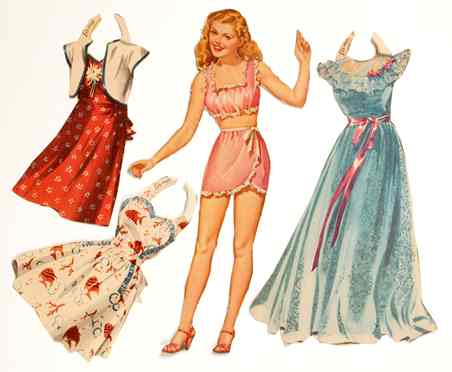
By around 1900, paper dolls reached unprecedented popularity. They served as promotional giveaways on packaging for coffee, chocolate, or sewing thread, and could be found across a wide variety of newspapers and magazines. While this marked a peak in Europe that has never been surpassed, paper dolls in America continued to enjoy a massive fanbase for much longer. In fact, the 1930s through the late 1950s are considered the “Golden Age of Paper Dolls” in the US.
Paradoxically, the Great Depression—triggered by the 1929 stock market crash known as “Black Tuesday”—played a major role in driving this boom. With unemployment soaring to 25 percent and countless people working low-wage jobs, household incomes plummeted. Families could afford very little and turned to low-cost options for toys, propelling paper dolls to unprecedented sales success.
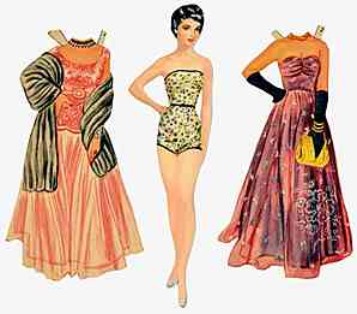
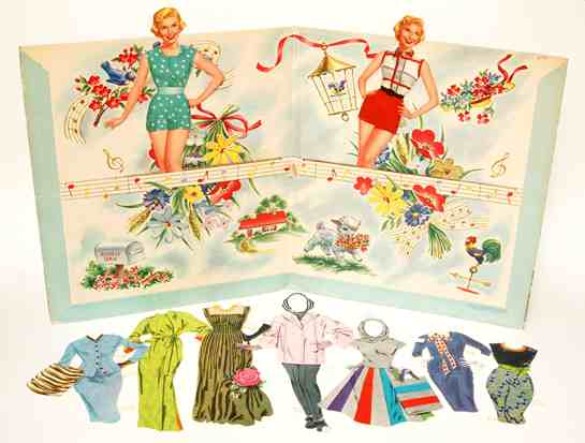
During this era, paper dolls were mostly sold in booklet form. Nestled between cardboard covers—from which the main dolls could be cut out or punched out along perforated lines—were several interior pages filled with paper outfits and accessories. Yet, because even these inexpensive booklets were out of reach for some, publishers issued even cheaper alternatives alongside regular editions: so-called “jobber books,” which featured thinner cardboard covers and fewer interior pages.
Thematically, American paper dolls of these decades can be roughly divided into five categories:
Babies and Children: Unsurprisingly, given that young girls were the main target audience, this was the largest category. Illustrators usually rendered these characters as sweet and adorable, though occasionally pleasantly cheeky and lively. Figures like Sally Lou, Dotty Double, Betty Jane, Tammy, and Patsy came with sweet dresses, alongside cut-out accessories like sand buckets, shovels, beach balls, or rocking horses to encourage imaginative play.
Fairy Tales and Legends: Children and adults alike could travel alongside a paper Gulliver to Lilliput, witness Cinderella’s royal wedding, help Snow White against her evil stepmother, or step directly into the “Wonderful World of the Brothers Grimm.”
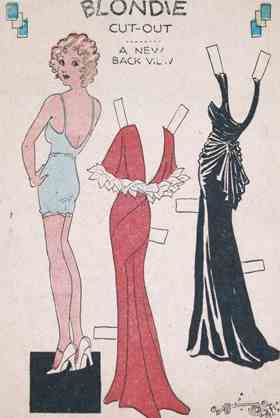
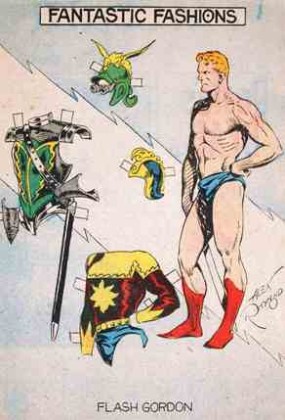
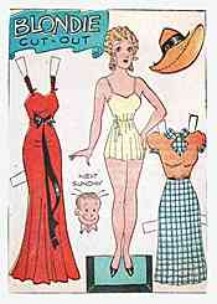
Comic Book Characters: Frequently featured in newspapers and magazines, these dolls were often printed as a bonus feature alongside popular comic strips like Blondie or Flash Gordon.
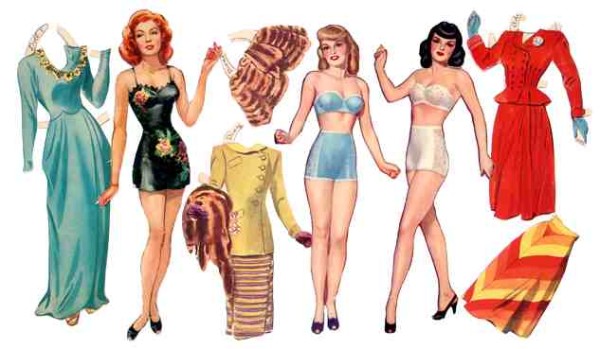
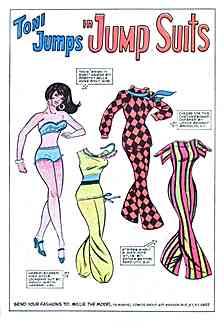
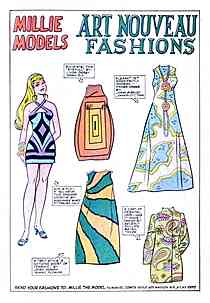
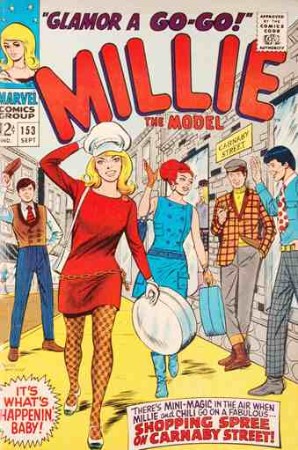
In addition, a whole series of comic books appeared—such as Katy Keene or Millie the Model—that revolved entirely around fashion and offered supplementary paper dolls alongside their standard illustrated stories. Furthermore, dedicated paper doll booklets were published for nearly all classic comic characters, including Superman and various Disney icons.
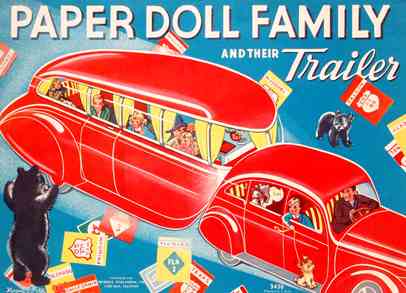
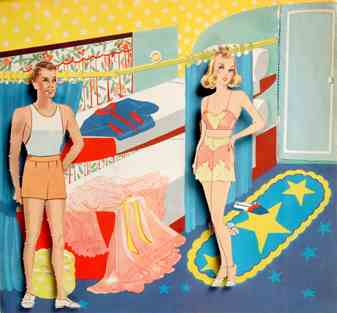
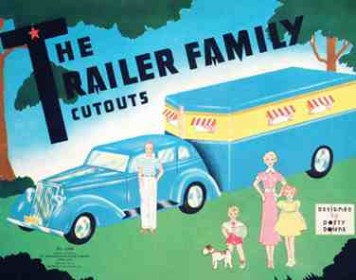
Particularly fascinating, however, are the paper dolls depicting the worlds of teenagers and adults. Unlike many areas of American art and culture—where social criticism and political commentary took root in response to the Great Depression—this two-dimensional world of paper remained, without exception, completely pristine and untouched by economic hardship. Yet, or perhaps precisely because of this, this distinctly American view through rose-colored glasses speaks volumes—as demonstrated, for example, by the 1938 booklet Paper Doll Family and Their Trailer published by the Merrill Publishing Company:
While John Steinbeck’s famous, nearly contemporaneous novel The Grapes of Wrath recounts the plight of a migrant farm family journeying from the drought-stricken Dust Bowl across the now-legendary Route 66 to California in search of work, the “Trailer Family” is clearly able to afford a cross-country road trip purely for pleasure in their lavishly appointed travel trailer.
The bears featured on the cover of the cut-out booklet, paired with a Wyoming road sign, suggest that the family is currently visiting Yellowstone National Park. Other depicted signs indicate that their itinerary also includes the “Sunshine State” of Florida and California.
A comparison between the meager living conditions described by Steinbeck and the opulent abundance showcased in the Trailer book reveals the vast socio-economic divide in 1930s America. Who knows—perhaps children growing up in circumstances similar to those Steinbeck described found a way to dream of a better life simply by gazing at the pages of a paper doll book like this.
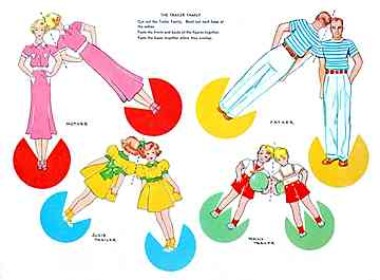
Setting such reflections aside, what remains is an exceptionally fascinating and collectible historical artifact. Across a total of eight pages, it offers play backdrops for the figures meant to be punched out from the cardboard cover. Contemporary children could choose whether to place “Mother” and “Dad”—along with the kids, baby, dog, and cat—in the living room, dining room, one of the two bedrooms, kitchen, bathroom (complete with a bathtub!), or the nursery of this “space-saving miracle” travel trailer.
Things are slightly less lavish with another “Trailer Family,” featured in a paper doll booklet released that same year (1938) by the Saalfield Publishing Company.
Particularly striking are the rather static illustrations. Despite the dolls’ contemporary wardrobe, the art style still seems tethered to the traditional aesthetics of earlier decades. In direct comparison to the previously described booklet, it clearly documents the shift toward a more modern approach to illustration—and with it, the transition to the era of “Modern Paper Dolls.”
In the early 1940s, sales of paper dolls in America reached their absolute peak. A significant factor in this surge was undoubtedly the wide variety of military- and patriotic-themed cut-out books that surfaced right as the United States entered World War II.
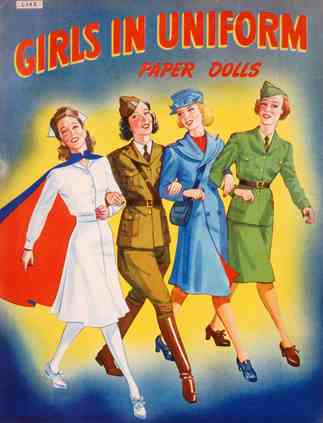
While publishers seemed to have no trouble stirring young boys’ enthusiasm for war through cut-out sheets featuring soldiers and tanks, they took a more indirect route to make the topic palatable to young girls. Consequently, the vast majority of these patriotic paper dolls packaged their message in themes traditionally targeted at girls:
Military Weddings: Titles like Army and Navy Wedding Party or Military Wedding centered the play around romance and marriage.
Fashion & Uniforms: Booklets like Dolls in Uniforms of the U.S.A. and Girls in Uniform conveyed that a woman could look chic, feminine, and stylish even while wearing military attire.
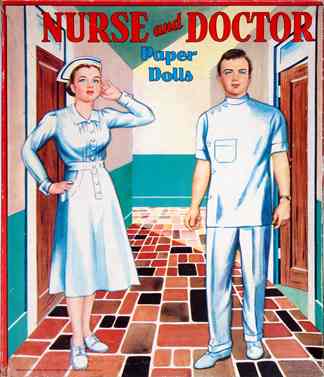
Support Roles & Healthcare: Titles such as Army Nurse allowed young girls to step into the role of a compassionate nurse caring for troops.
Patriotic Youth & Children: Even the youngest audience was included. In a booklet titled Uncle Sam’s Little Helpers, sweet-faced toddlers—and even an adorable kitten—appeared delighted to don uniforms.
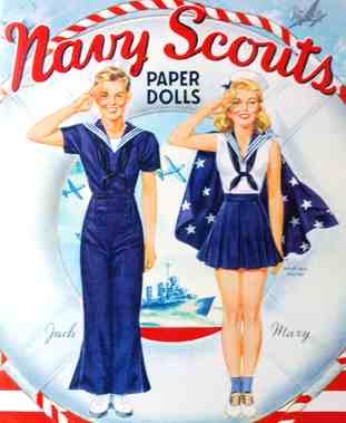
Whether in Victory Paper Dolls, Junior Volunteers, Our Soldiers – Cut Out Army Uniforms, or Navy Scouts, the beaming faces of these paper dolls consistently suggested just how joyful and rewarding it apparently was to serve the nation during wartime.
.
As the 1940s progressed, a sense of normalcy gradually returned, and military uniforms in paper doll wardrobes gave way to outfits for commercial airline pilots and stewardesses.
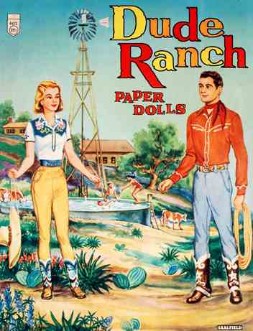
Instead of wartime duty, paper dolls turned their focus toward American leisure and recreation. City dwellers, for instance, loved unwinding at a “dude ranch”—a uniquely American resort experience blending western ranch life with upscale vacationing (much like a luxurious western farm stay).

“Real” cowboys hardly ever appear as paper dolls—which is scarcely surprising, given that cowboys didn’t exactly have a reputation for changing clothes several times a day or keeping an elegant suit tucked under their saddle blanket “just in case.” They simply didn’t offer enough versatility for this kind of play.
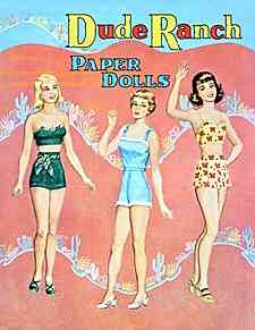
The dude ranch, on the other hand, held the distinct advantage that women could play a prominent role as well. In a paper doll booklet of the same name, alongside the couple featured on the front cover, three female paper dolls can be found on the back cover. For these figures, the interior pages featured stylish Western outfits complete with intricate fringing—which must have put the fine motor skills of any child wielding a pair of scissors to a severe test—as well as plenty of dresses for evening dances.
Otherwise, the “Wild West” mostly made its appearance in paper doll form as rodeo shows—naturally featuring stylish cowgirls as well—or as dedicated booklets for country singers and actors like Gene Autry and Roy Rogers, who rose to immense popularity in the mid-1930s as America’s iconic “Singing Cowboys.”
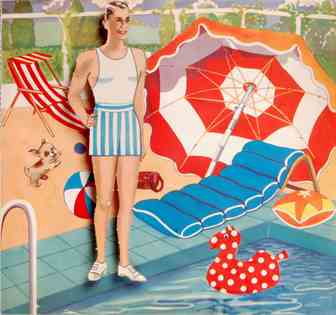
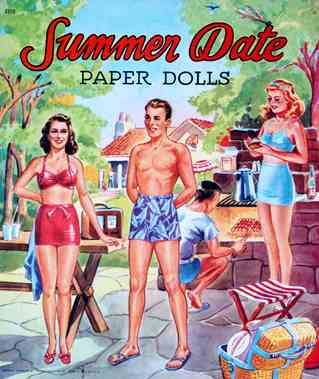
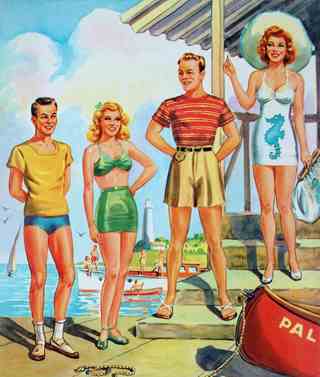
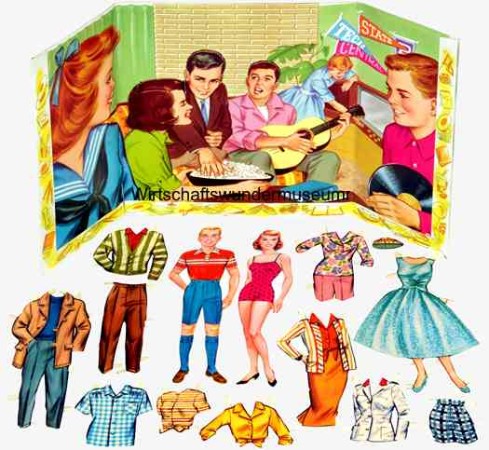
Generally speaking, however, leisure time back then was spent much as it is today. Paper dolls carried children off to the beach, the circus, the carnival, square dances, or simply to a backyard barbecue, allowing today’s viewer to step back in time through charming and highly evocative illustrations that capture mid-20th-century American lifestyle.
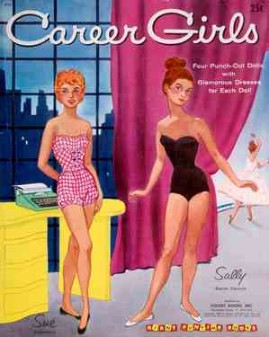
What is particularly remarkable in almost all of these booklets is the image of women being portrayed. While one might expect that—in line with the conservative, traditional gender roles prevailing at the time—women as paper dolls would be largely confined to the kitchen and reduced to their role as devoted mothers, they were instead consistently depicted as confident and independent. “Career over kitchen” was the order of the day in numerous cut-out booklets focusing on “career girls.”
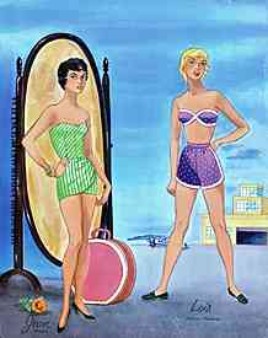
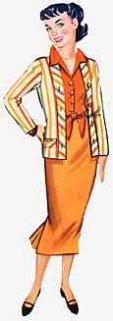
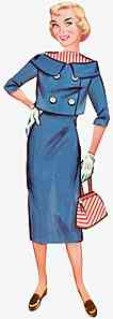
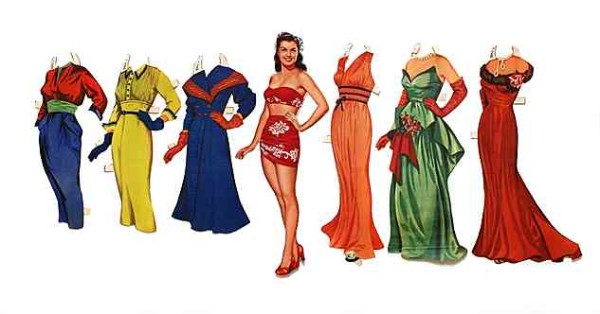
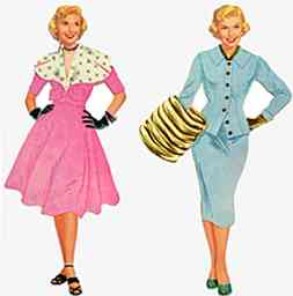
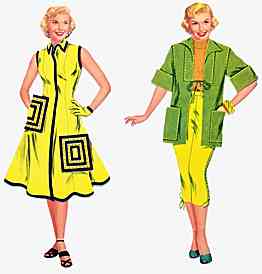
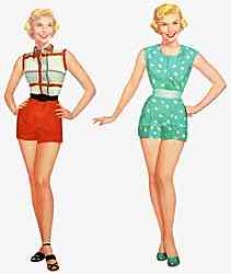
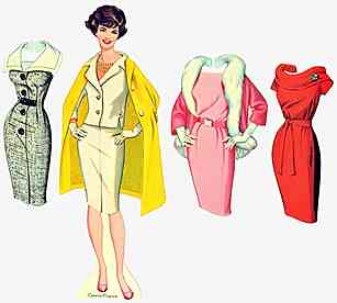
While these figures rarely broke into top executive positions, paper doll characters like Sally, Sue, Jean, Lois, and countless colleagues still cut a impressive figure as executive secretaries, teachers, or stewardesses. By far the two most popular professions, however, were ballet dancers and, of course, fashion models. Booklets featuring models often showcased more flamboyant and unique attire alongside conventional wardrobes, offering a colorful journey back in time through the fashion world of that era.
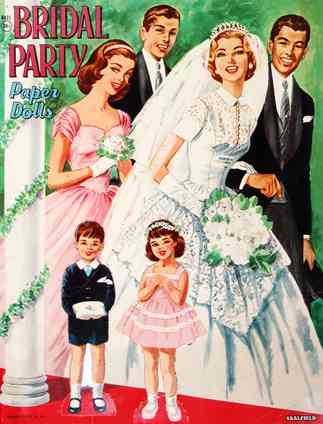
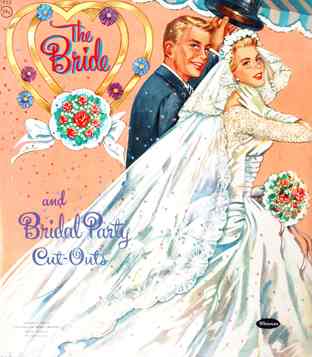
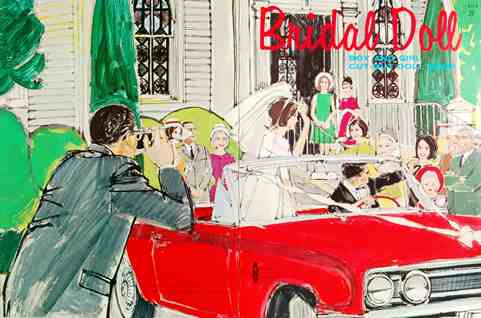
Yet, in line with mid-century American sensibilities, a good job was ultimately not seen as a young woman’s sole destination—a fact well attested by the overwhelmingly large number of wedding-themed paper doll sets.
These sets provided cut-outs not only for the bride and groom—dressed appropriately for their big day—but also for bridesmaids, the maid of honor, and the best man, who, in keeping with American wedding tradition, also shared responsibility for helping organize the festivities leading up to the ceremony.
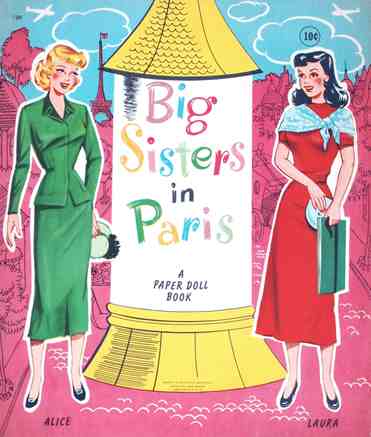
Beyond these themes, paper doll sets covered virtually every other subject that young girls worldwide loved to play with—from international travel in titles like Big Sisters in Paris, to a passion for pets in numerous dog, cat, and pony books.
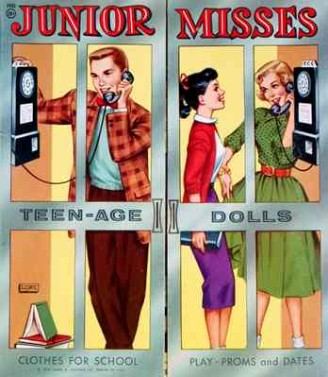
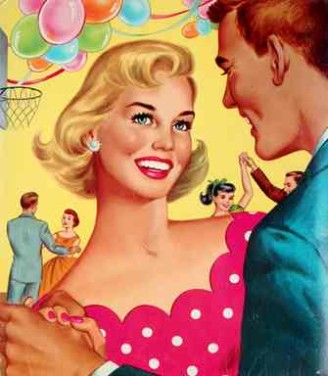
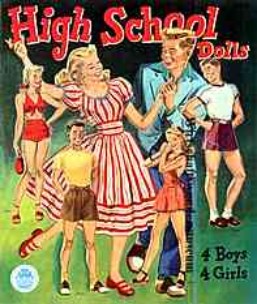
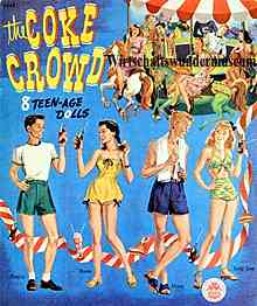
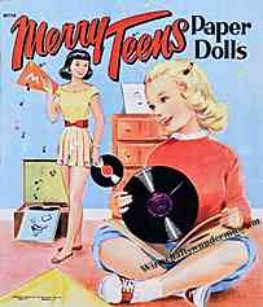
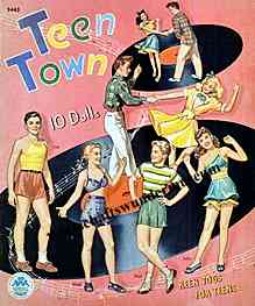
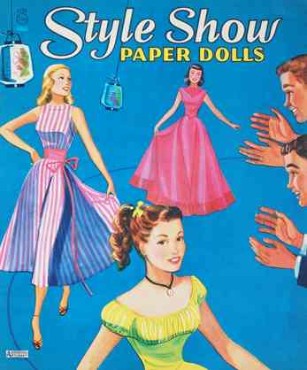
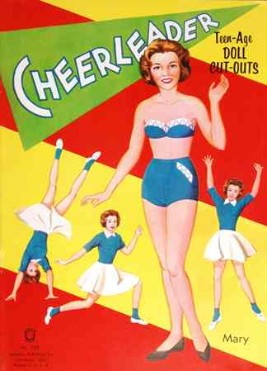
By contrast, booklets centering on teenage life and the high school experience were a distinctly American phenomenon. Featuring delightfully charming depictions of popcorn, parties, and petticoats, these booklets are a true visual treat for any modern-day fan of the 1950s.
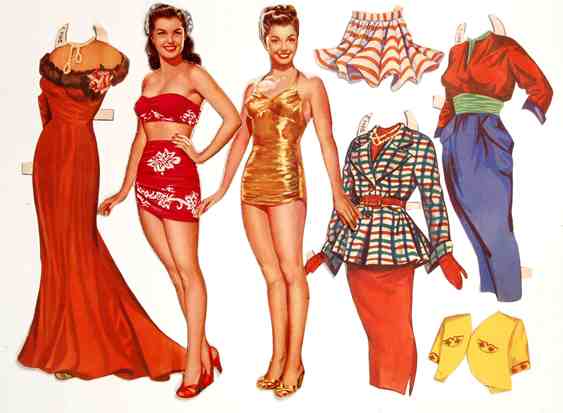
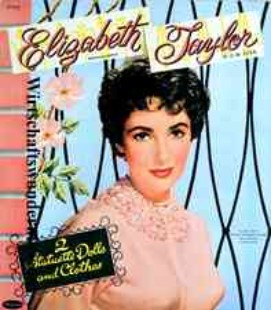
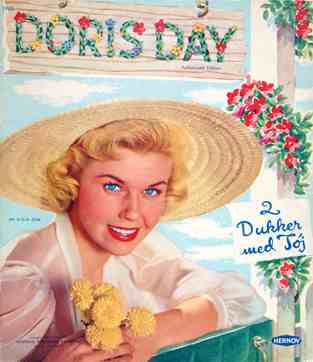
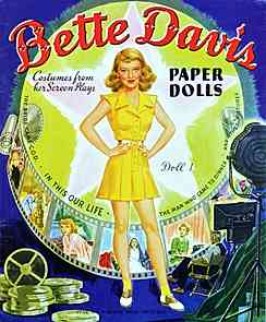
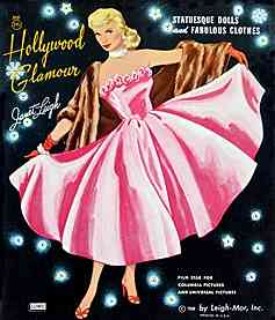
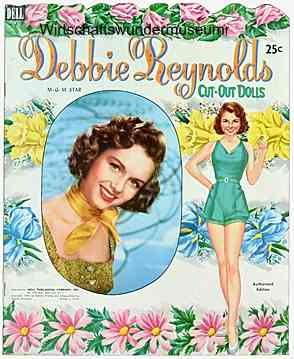
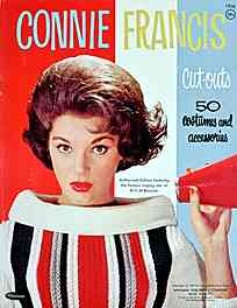
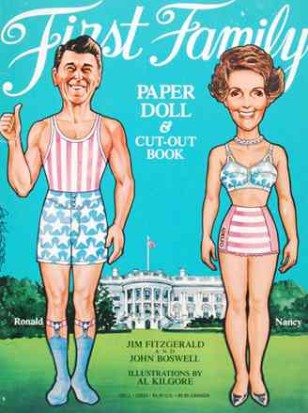
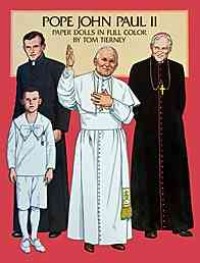
By far the largest sector in the paper doll universe of the 1930s and subsequent years, however, comprised booklets featuring celebrities, primarily drawn from the world of cinema. On one hand, this reflected the immense—if perpetually puzzling—public fascination with star power, both then and now. On the other hand, the triumph of the “talkies” (sound films) had ushered in more popular actors than ever before.
Making matters easier for paper doll manufacturers, licensing rights were typically far simpler to navigate than they are today. Under all-encompassing studio contracts, many screen icons were essentially owned lock, stock, and barrel by their respective film companies. Because the studios anticipated a powerful promotional benefit, they routinely granted licensing permissions for their stars to appear in the toy sector with great generosity.
Alongside various screen stars who were primarily popular within the US or have since faded into obscurity, the paper doll universe features plenty of names that remain household words even decades later—and not just to die-hard movie buffs.
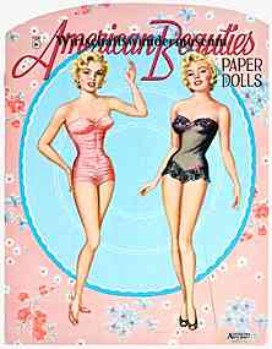
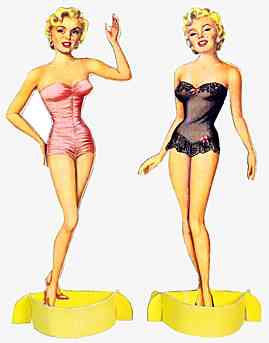
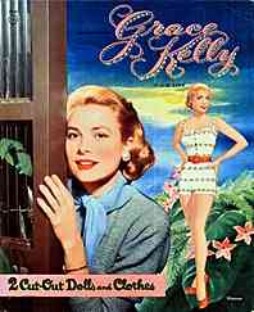
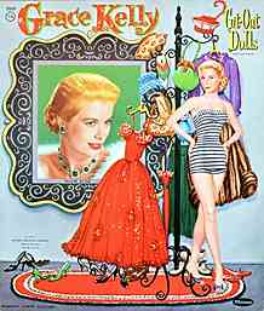
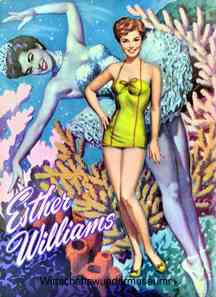
Elizabeth Taylor, Grace Kelly, Kim Novak, Julie Andrews, Jane Russell, Rita Hayworth, and the “Bathing Venus” Esther Williams all belong to this elite group. So does Marilyn Monroe, who, for fashion’s sake, was rendered as a paper doll with an exaggerated wasp waist that the sex symbol certainly never possessed in real life.
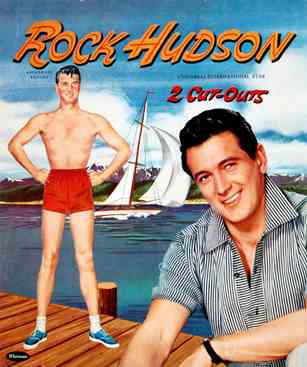
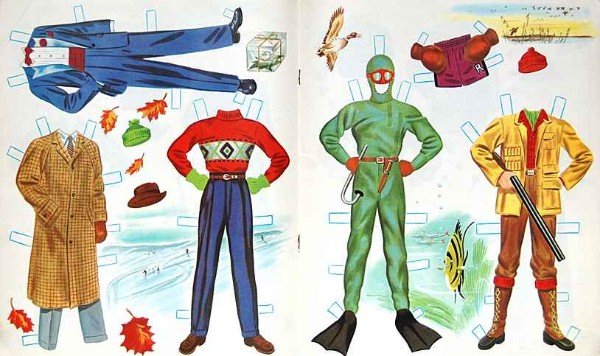
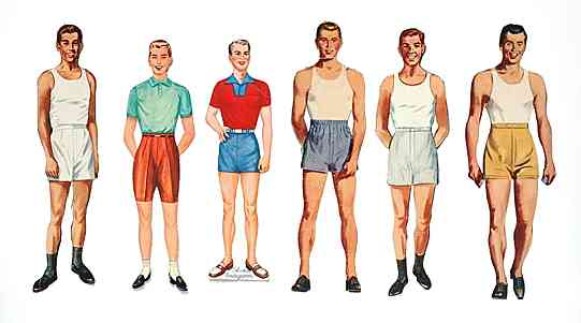
The proportion of male actors represented as paper dolls was comparatively small. However, those who did achieve paper doll status were true silver-screen icons. Collectors could completely re-outfit Charlie Chaplin, James “Jimmy” Stewart, or Rock Hudson—the latter clearly branded with an athletic image, offering boxing gloves and a full scuba diving suit alongside casual leisurewear and film costumes.
Hollywood heartthrob Clark Gable came in several different versions, though always paired with Vivien Leigh, his equally captivating co-star in the cinematic classic Gone with the Wind.
The absolute favorite in the paper doll universe—and the centerpiece of several dozen cut-out booklets—was child star Shirley Temple. Winning an Oscar at the tender age of six, she remains the youngest Academy Award recipient in history and appealed to multiple generations. For children her age, she felt like a playmate, while for adults, she served as a beacon of hope against the dark horizon of the Great Depression. As a result, not only did her paper dolls achieve massive sales figures, but so did Shirley Temple porcelain and composition dolls, while her widespread popularity was harnessed for highly lucrative commercial advertising.
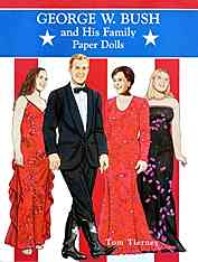
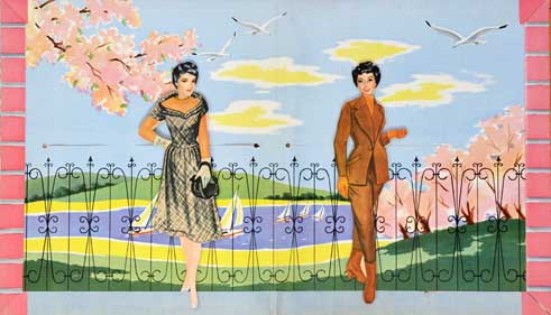
Many celebrity cut-out books in the 1950s also offered a clever feature: horizontal slits on the inner pages created paper pockets designed to store the paper dolls and their cut-out accessories. Quite a few of these storage pages were so charmingly illustrated that they are considered highly collectible works of art in their own right.
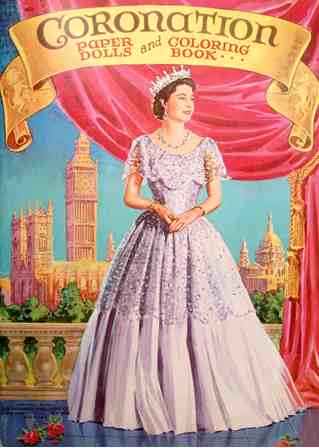
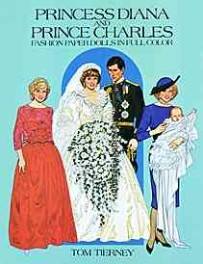
Also belonging to the “celebrity” category are members of royalty, with the British royal family being a particular favorite. For instance, the magnificent coronation of Queen Elizabeth II could be authentically re-enacted using a 1953 Saalfield release—a combination paper doll and coloring book complete with a throne and a majestic horse-drawn carriage waiting to be painted in shimmering gold.
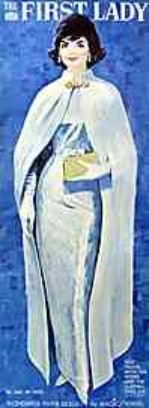
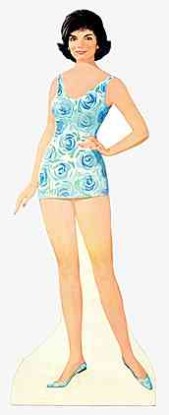
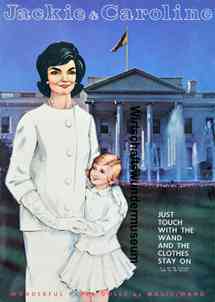
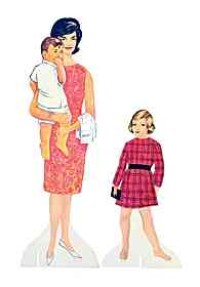
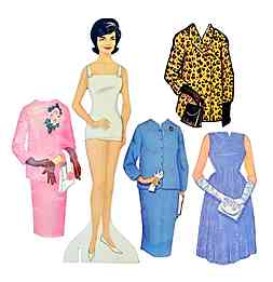
By contrast, one of the most spectacular paper dolls of all time pays fit tribute to an uncrowned queen. Offered in 1963 by the Magic Wand Corporation, a sturdy cardboard Jackie Kennedy doll stood at an astonishing 30 inches tall, matching in size the towering cultural importance of her real-life counterpart.
As a special feature, the design dispensed with the traditional fold-over paper tabs used to secure outfits: the wardrobe clung to the impressively large Jackie figure completely on its own. The reason for this trick was not, however, the small red plastic magic wand included in the set—as the packaging playfully led children to believe—but rather the very un-mysterious principle of adhesion, the molecular attraction between two smooth surfaces.
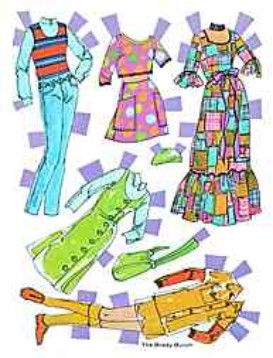
Throughout the 1960s, other manufacturers increasingly released paper dolls utilizing this same technique. Due to production requirements, these sets were no longer sold as booklets, but were packaged instead as boxed sets.
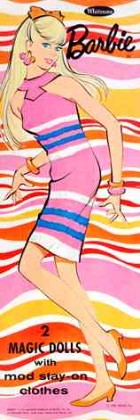
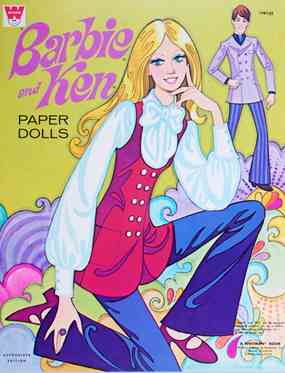
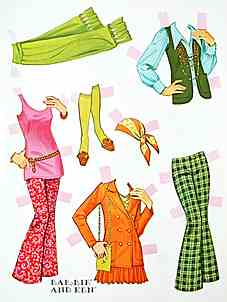
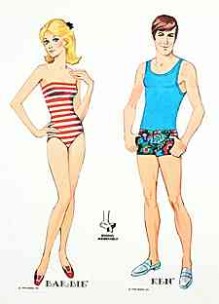
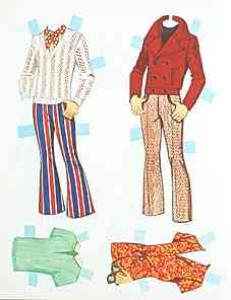
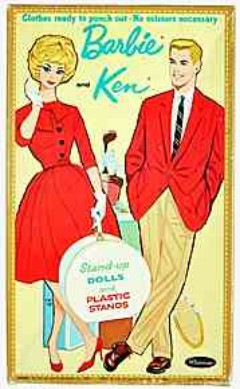
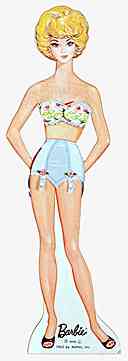
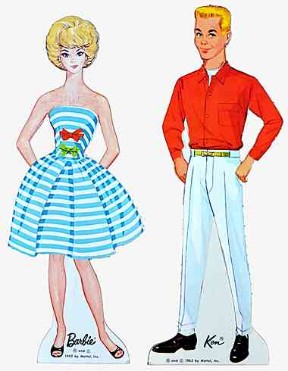
By the late 1950s, however, interest in paper dolls began to wane noticeably in the US. Children were spending more time in front of the television or dressing and undressing Barbie dolls, which began their unprecedented rise during those years. Ironically, Barbie creator Ruth Handler got the idea for her global hit while watching her daughter play with paper dolls—prompting her to design a doll with fashion-model features rather than the usual childlike appearance.
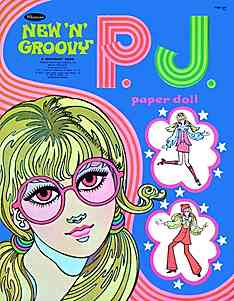
Even as paper dolls battled declining sales figures, manufacturers continued to produce them diligently. Intriguingly, paper doll sets themed around Barbie herself enjoyed considerable success, making the paper format a wonderful medium for tracing her stylistic evolution across the decades.
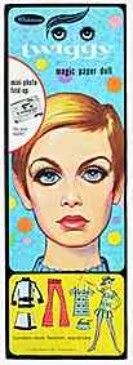
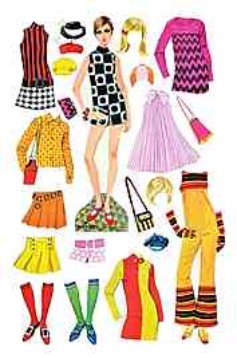
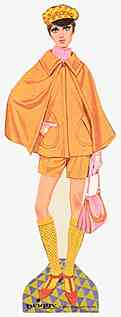
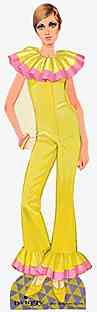
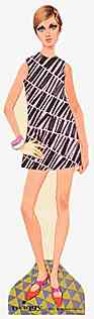
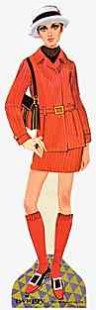
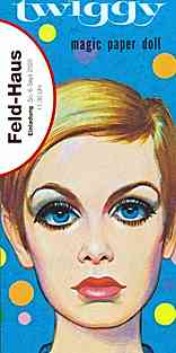
A standout highlight for fashion enthusiasts is a paper doll modeled after British style icon Twiggy. Produced by Whitman in 1967, this self-clinging “Magic Paper Doll” came in an attractively illustrated box, offering a generous array of wildly colorful outfits in the unmistakable look of the Swinging Sixties.
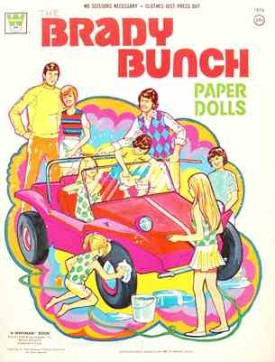
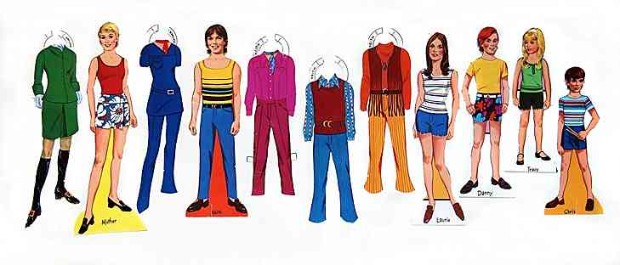
Finally, mention should be made of several nostalgic paper dolls based on American television series that were also immensely popular in Germany.
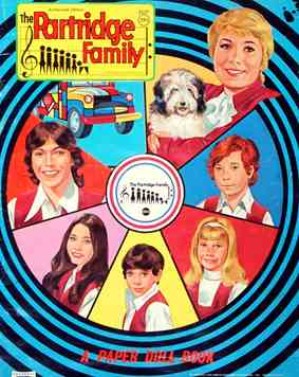
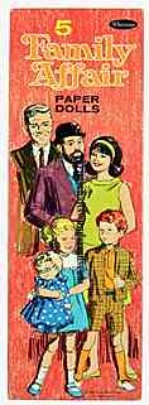
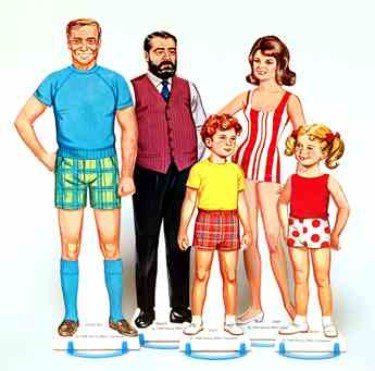
Leading the pack was The Partridge Family, who traveled to their music gigs in a brightly colored bus and whose cast members—particularly Susan Dey and David Cassidy—became absolute teen idols. The American series Family Affair was also a huge hit in Germany under the title Lieber Onkel Bill. Its young stars, Jody and Buffy, along with Buffy’s iconic doll Mrs. Beasley, were so wildly popular that all three received their own paper doll booklets.
Overall, the selection of American paper dolls from this era is vast. Collector Mary Young documented the vast majority of them in her various price guides (available, unfortunately, only in English). According to her listings, the Saalfield Publishing Company alone produced well over 1,500 different titles.
Prices for these booklets range from a single dollar for common, incomplete items to several hundred for rare, highly sought-after pieces. The latter category includes a 1933 Mickey Mouse cut-out book as well as paper doll sets featuring Glenn Miller and Gone with the Wind.
Uncut booklets naturally command the highest prices and are still surprisingly easy to find. Unopened sets—or those with only one or two outfits cut out—serve as proof that the tedious work of precise cutting wasn’t every child’s cup of tea. Uncut books do, however, come with one obvious drawback: collectors can’t actually play with them.
Buyers should also note that old and new reprints exist for many of these paper dolls. In the simplest cases, modern reissues can be spotted by a barcode on the back cover. Older reprints often display a price tag that differs from the original. Furthermore, if the reverse side of cut-out accessories shows varying degrees of yellowing, it likely indicates that missing pieces were replaced using a newer edition.
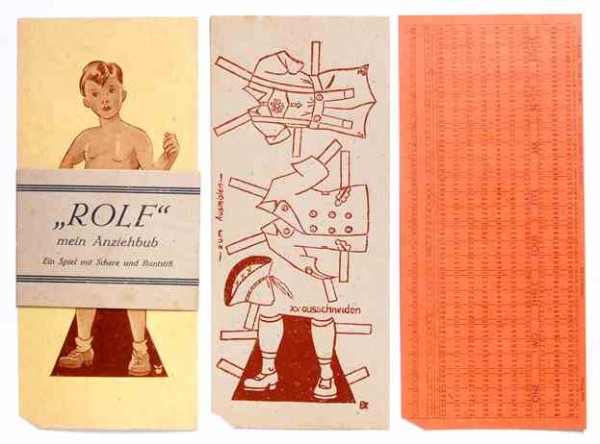
During the same period, paper doll culture was far less prominent in Germany and the later GDR than in the US. Even so, there are plenty of unusual, story-rich paper dolls to uncover in this region as well. Two curious examples serve as a brief teaser for potential collectors: “Rolf – mein Anziehbub” (“Rolf – My Dress-Up Boy”) perfectly illustrates the paper shortages of the post-war era.
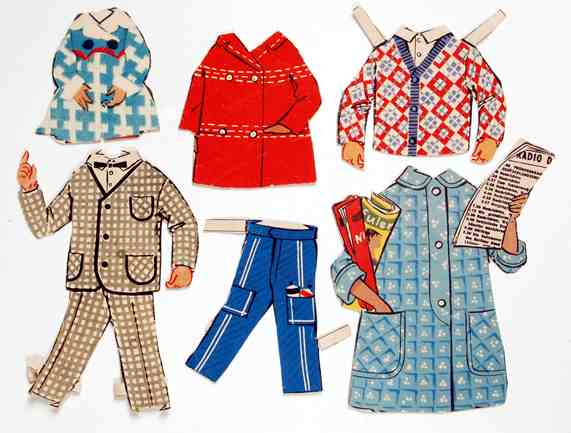
This “game with scissors and colored pencils” was printed on the reverse side of unused IBM punch cards sourced from US Air Force stock, and the outfits had to be colored in first. By contrast, a paper doll from the GDR reveals a subtle piece of hidden systemic criticism upon closer inspection: tucked under the doll’s arm is a radio program listing state-approved broadcasts like “Soviet Artists Perform.” Under the other arm is a newspaper with only three visible letters—just enough to infer it is Eulenspiegel, the East Germany’s sole satire magazine at the time.
A brief note regarding our loanable exhibition:
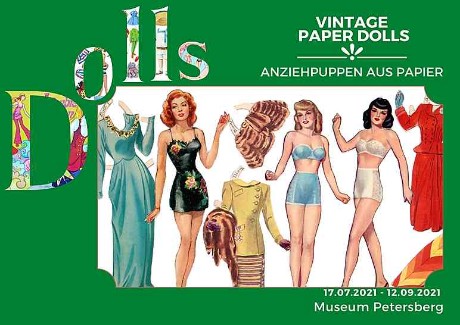
Vintage Fashion - Anziehpuppen aus Papier
Previous venues for the exhibition:
6.9.2020 – 21.3.2021 Feld-Haus – Museum für Populäre Druckgrafik, Neuss
17.7.2021 – 12.9.2021 Museum Petersberg / Saalekreis
Further loan requests are welcome!