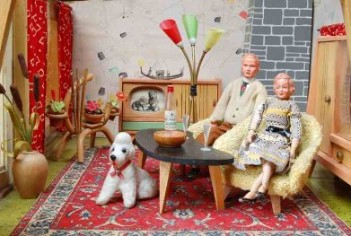
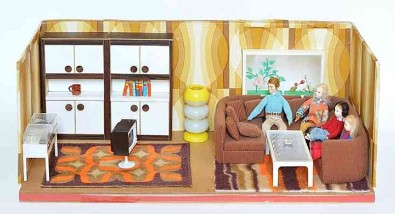
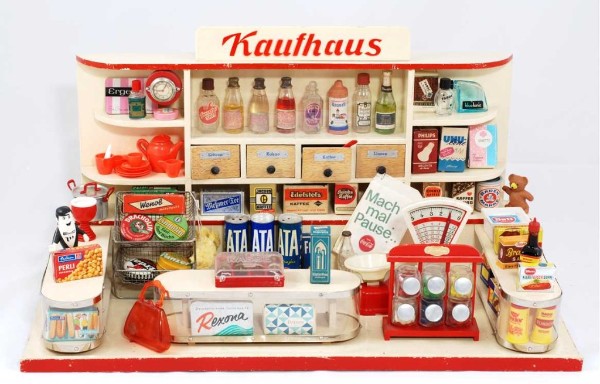
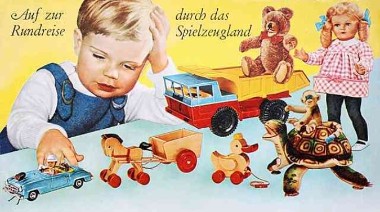
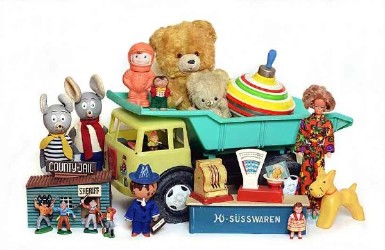
It is important to me to view old toys first and foremost in the context of the people and times in which they were made. For me, this means that I do not view historical toys—as is unfortunately often the case today—primarily as commercial items with a more or less high material value, but rather as what they were originally produced to be: small pieces of the mosaic that is childhood and, thus, the development of a very specific individual.
It is therefore undoubtedly most rewarding when I receive items directly from their original owners, who can tell me something about the history of their toys. These are often not spectacular stories or anecdotes at all, but rather a firsthand sense of the respective era—be it the 1930s, 1950s, or 1970s. In any case, however, a firsthand account of children’s lives, their outlook on life, and the little things of everyday life is far more important to me than researching manufacturers or market values.
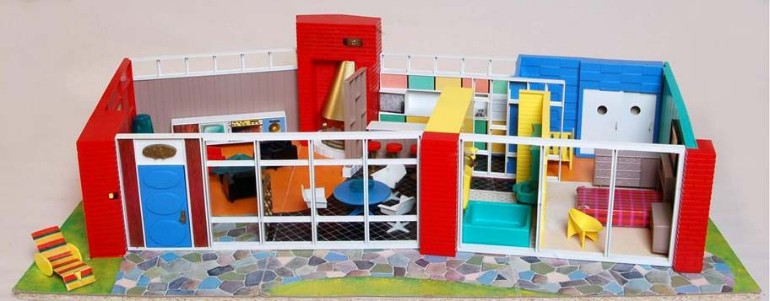
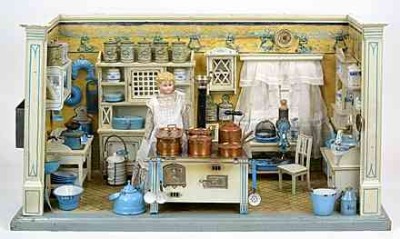
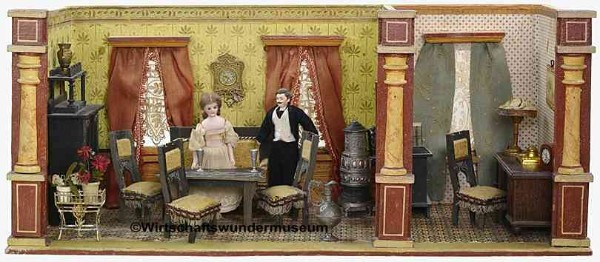
For example, if I’m lucky enough to receive a dollhouse from its original owner, I always leave the toys in their original condition. Normally, I set up the dollhouse exactly as the child who owned it originally furnished and played with it. If pieces of furniture or little dolls were added as gifts over several years and don’t match the taste of a “style purist,” that doesn’t matter to me. In these cases, I simply want to document them as museum pieces.
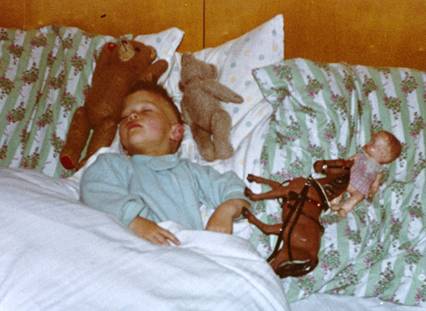
By the way: Signs of play, even significant ones, are part of the experience for me. And I even believe that toys that have never been played with have failed in their purpose!