

The Ursula Luhr Collection of Historic Dollhouses

Ursula Luhr was a collector through and through; over many years, she amassed a selection of dollhouses, toy stores, and dolls. The collection eventually grew into something both exquisite and meaningful, which sparked the desire to make it accessible to the public. – I am delighted that this wonderful collection has been entrusted to my museum for this purpose, and I will gradually present as many of these beautiful pieces as possible here. I have left all the objects exactly as Ursula Luhr arranged them. – Learn more about the collector at the end of the photo gallery.

©Photos: Jörg Bohn, Wirtschaftswundermuseum

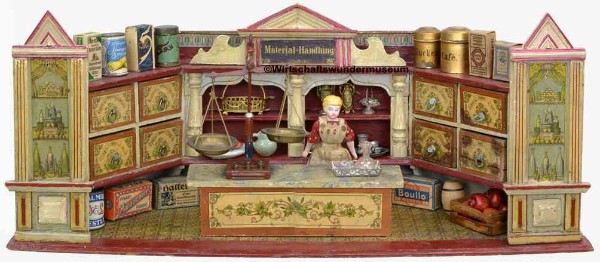
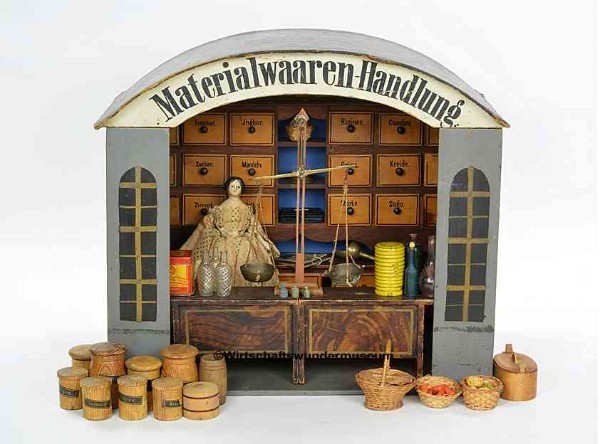
"Material-Handlung", Maße: 57 x 18 x 24 cm
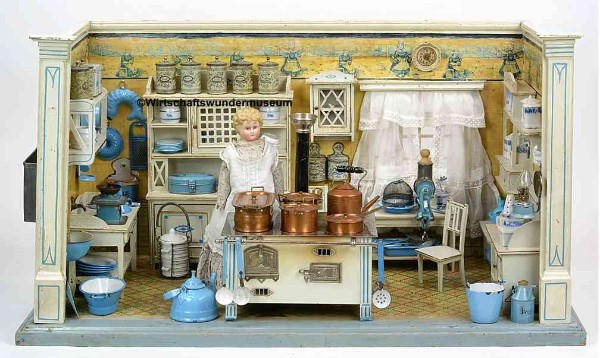
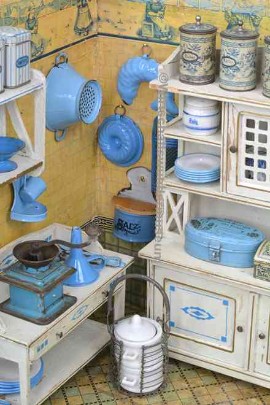
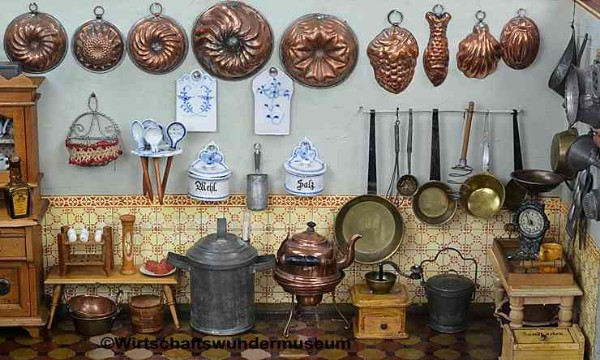
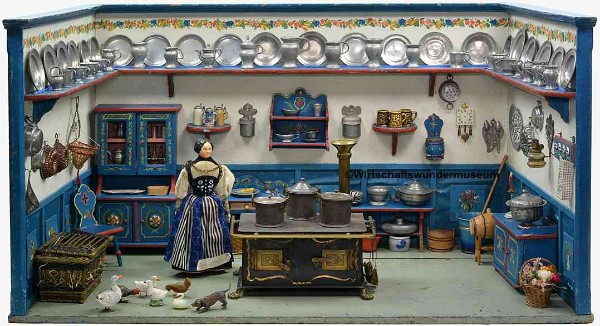
Puppenküche, um 1900, Maße: 89 x 45 x 48 cm
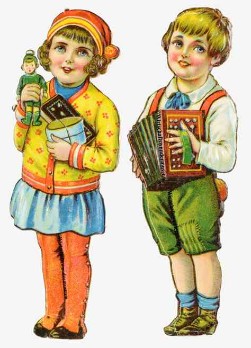
Victorian Scrap / Die-Cut Relief (Glanzbild) Height: approx. 4.7 in (12 cm)
Oblaten / Glanzbilder, Höhe jeweils 18 cm
Dimensions: 19.3 × 11.0 × 9.1 in (49 × 28 × 23 cm)

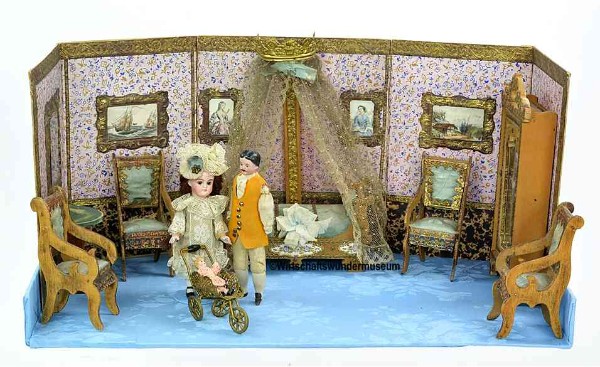
Folding Dollhouse Room Box (c. 1890)

Dating from around 1890, this collapsible dollhouse room breaks away from traditional solid-wood construction, using instead a folding backdrop made of heavy cardboard mounted with colorful lithographed paper. This design reflected the growing demand of the rising middle class for space-saving toys that could be folded flat and easily stored away after playtime.

Stylistically, the room box depicts an upscale, late-19th-century Historicist bedroom. Its walls are decorated with printed, richly ornamented gold frames featuring typical middle-class artwork, including seascapes and portraits. The focal point of the scene is a canopy bed draped in fine tulle, flanked by a grand wardrobe and delicate, curved chairs inspired by 19th-century German Biedermeier and Neo-Rococo revival styles.

Such folding room backdrops were mass-produced around the turn of the century, making dollhouse play affordable for a much broader public for the first time.

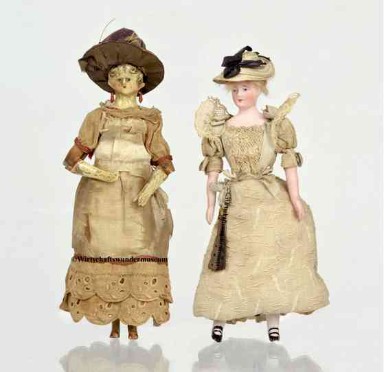
Puppen für die Puppenstube, Höhe ca. 19 cm
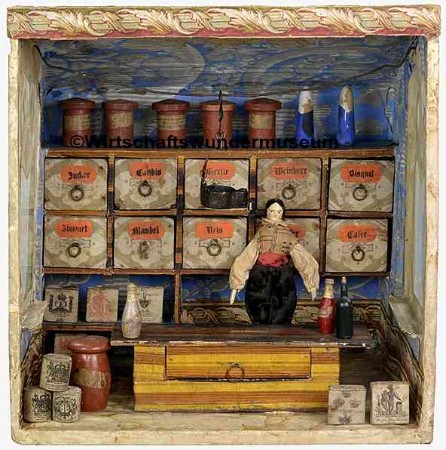
Kaufladen, 1. Hälfte 19. Jahrhundert, Maße: 33 x 24 x 33 cm
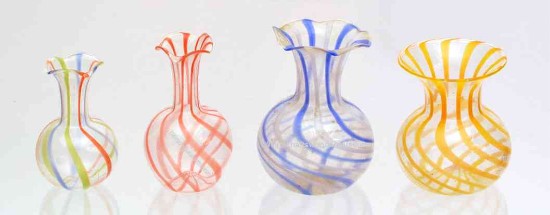
Miniaturen für Puppenstuben aus Lauscha-Glas, Höhe max. 5 cm
Dimensions: 33.9 × 17.7 × 14.2 in (86 × 45 × 36 cm)

Two-Room Dollhouse Box (c. 1890)

Dating from around 1890, this two-room dollhouse set vividly illustrates the affluent upper-middle-class domestic culture of the late 19th century. The wooden casing is divided into two separate spaces representing a bedroom and an adjoining formal parlor (Salon).

The architectural division into two distinct living zones directly reflects the changing structure of upper-middle-class households during this era. While the formal parlor was designed for entertaining guests and displaying social status, daily family life increasingly shifted into the privacy of the bedroom. The crucifix mounted on the left wall above the bed was a deliberate choice: it documents the prominent role of religion, morality, and Christian virtue in daily life at the time, values intended to be passed on to children through play.

The furnishings showcase the rapid technological shifts of the Industrial Era. Unlike the handcrafted, one-of-a-kind wooden pieces of the earlier Biedermeier period, the furniture in both rooms stems from the early days of mass toy production. Renowned manufacturers such as Moritz Gottschalk and traditional workshops in Saxony’s Ore Mountains (Erzgebirge) region produced standardized furniture like this through specialized cottage industry labor and early factory production.

Furthermore, the lavishly set table in the parlor—complete with detailed miniature tin and pewter tableware—highlights Germany’s thriving metal toy industry centered in cities like Nuremberg and Fürth. In this way, the toy served as a hands-on educational tool, preparing young girls for their future roles and organizational duties as the lady of the household.

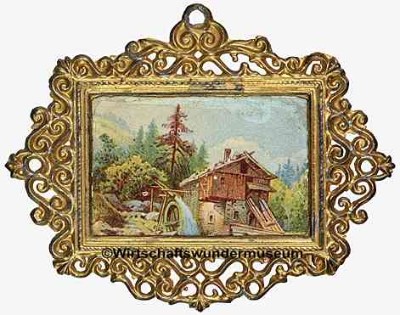
Miniature Framed Wall Picture (Erhard & Söhne) Frame: Gilded brass (gold-plated sheet metal) Dimensions: approx. 3.3 × 2.8 in (8.5 × 7 cm)
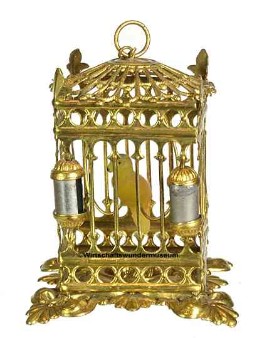
Vogelkäfig, Höhe: ca. 6,5 cm
Große Puppenküche, Maße: 118 x 49 x 42 cm
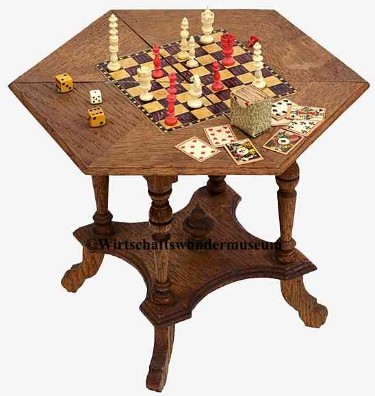
Spieltisch, Höhe der Tischplatte ca. 14 cm
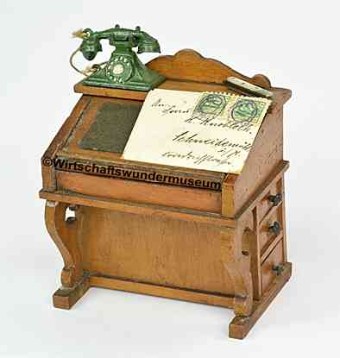
Sekretär für die Puppenstube, Höhe ca. 10 cm
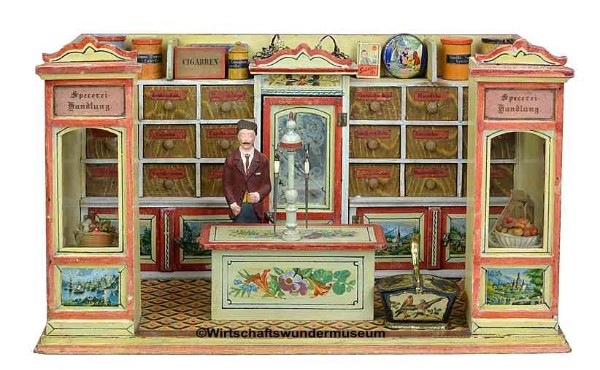
"Specereien-Handlung", Hersteller: Christian Hacker, Maße 47 x 25 x 28 cm
Dimensions: 15.7 × 5.5 × 5.9 in (40 × 14 × 15 cm)

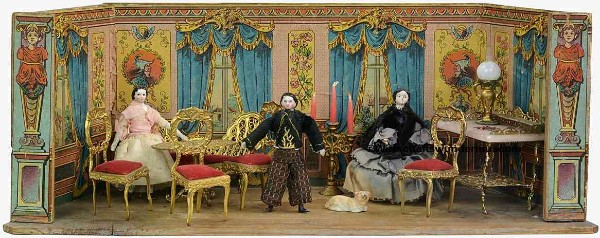
Single-Room Dollhouse Box (c. 1870–1880)

Dating to the second half of the 19th century—specifically the decade between 1870 and 1880—this elegant dollhouse room box depicts an upper-middle-class Historicist parlor (Salon). The interior design heavily reflects the popular Baroque Revival and Rococo Revival styles of the period.

Characterized by ornate gilded moldings above the windows and wall paneling, the room features lavishly decorated, gold-finished furniture upholstered in rich red fabric. The detailed printed wallpaper in the background convincingly mimics the heavy fabric drapes and textile wall coverings typical of wealthy homes during Germany’s industrial expansion era (Gründerzeit).

The three dolls fit seamlessly into this setting, wearing high-collared dresses with voluminous skirts characteristic of late-19th-century fashion. Together with the intricate decor, they capture the grand residential ideal of the Victorian era.

Dimensions: 29.9 × 12.6 × 15.7 in (76 × 32 x 40 cm)

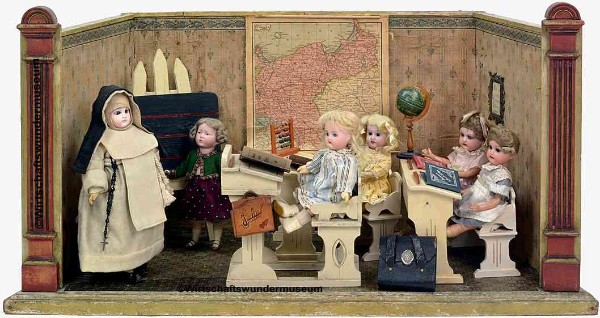
Dollhouse Schoolroom Box (c. 1890/1900)

Produced by the renowned Moritz Gottschalk toy factory during the late Victorian era (c. 1890/1900), this dollhouse room box and its staged interior offer a fascinating glimpse into education during the late German Empire.

A striking feature of this miniature classroom is the teacher figure, depicted as a Catholic nun dressed in a traditional full habit with a long rosary. In 19th-century Germany, elementary education was deeply tied to religion, and the schooling of young girls in many regions was traditionally entrusted to Catholic religious orders.

The furnishings closely recreate the school routine of the era. Mounted on the back wall is a period map showing the German Empire within its post-1871 borders, a tool used for teaching both geography and patriotic civic duty. The rigid, light-colored wooden school desks—featuring integrated seats and writing surfaces—reflect what was then state-of-the-art classroom design, engineered to promote proper posture among students.

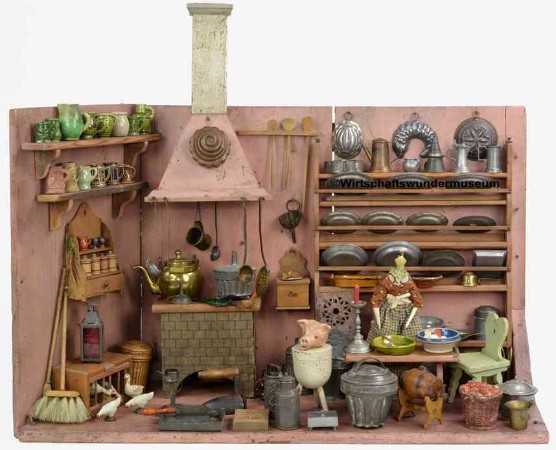
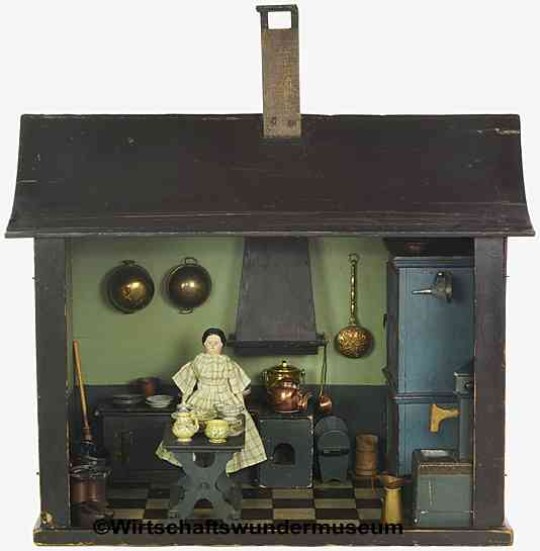
Dimensions: 30.3 × 11.8 × 17.7 in (77 × 30 × 45 cm, excluding chimney)

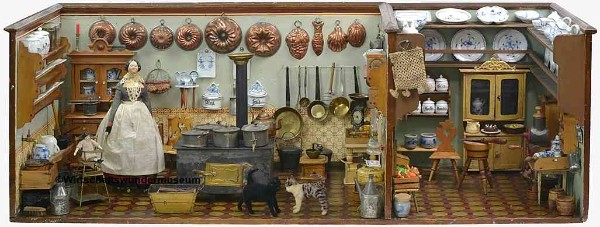
Miniature Open-Hearth Chimney Kitchen (Rauchfangküche)

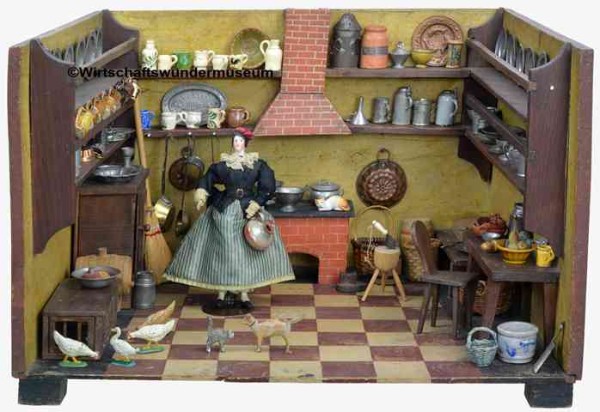
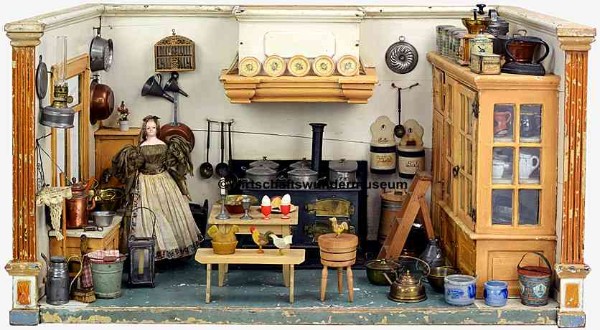
The open-hearth chimney kitchen—traditionally known in German as a Rauchfangküche or Schwarzküche (“black kitchen”)—is a central feature of 19th-century miniature dollhouse worlds. At a time when real-life domestic work centered around hard physical labor at an open flame, these intricately detailed miniatures brought daily household routines directly into the playroom.

In real homes, the characteristic funnel-shaped chimney hood was designed to draw smoke upward away from the open hearth—a feature faithfully replicated in toy kitchens using sheet metal or wood. Outfitted with tiny copper pots, brass kettles, and miniature kitchen utensils, these collectibles reflect the technological shifts of the Biedermeier period and the onset of the Industrial Era.

However, they were far more than simple playthings. Wealthy families used these lavishly equipped chimney kitchens as educational training tools to playfully yet intentionally prepare young girls for their future duties as ladies of the household. Today, they offer us a fascinating look into the domestic life and culinary culture of bygone eras.

Rauchfang-Puppenküche, um 1880, Maße: 43 x 33 x 27 cm

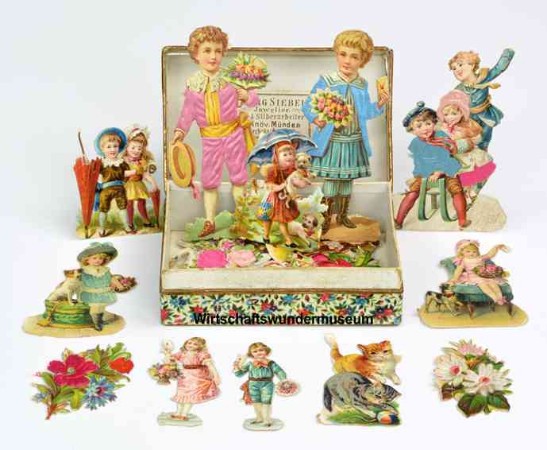
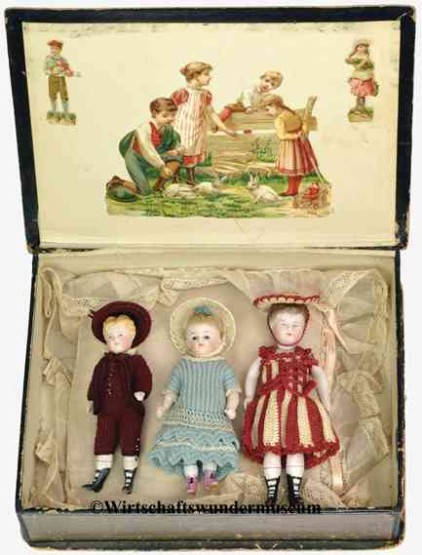
Ursula Luhr had a fondness for pretty little boxes that reveal new surprises time and again. These particular ones hold scrap pictures—or *Oblaten*—as well as dolls for a dollhouse.

Rauchfangküche um 1860, Maße: 66 x 43 x 54 (Kamin +15) cm
Puppenküche mit Geschirrschrank und Abstellraum, um 1890, Maße. 84 x 45 x 44 cm
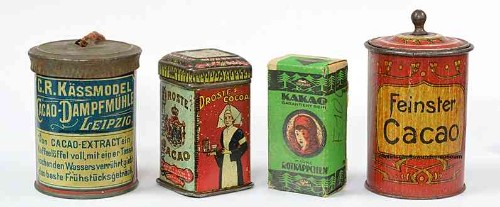
"Wichsmädel" Floor Wax Tin for a Toy General Store Diameter: 1.6 in (4 cm)
Große Puppenküche, Maße: 90 x 48 x 46 cm
"Materialwaaren-Handlung", um 1880, Maße: 43 x 26 x 23 cm
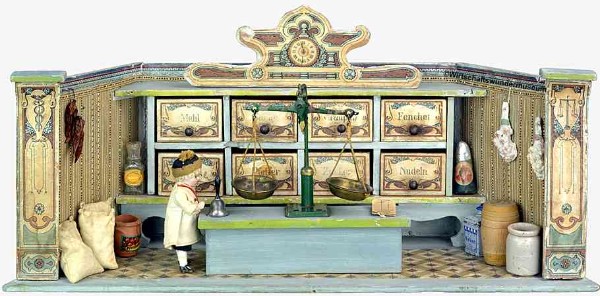
Toy General Store (a customer is ringing for the shopkeeper 😉 Dimensions: 18.9 × 6.3 × 7.1 in (48 × 16 × 18 cm)
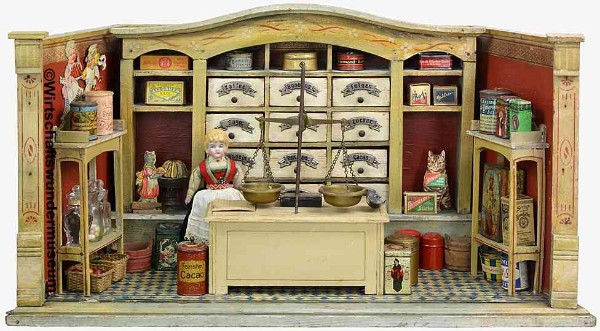
Toy General Store (c. 1900/1910), Manufacturer: Moritz Gottschalk, Dimensions: 26.0 × 10.6 × 13.4 in (66 × 27 × 34 cm)
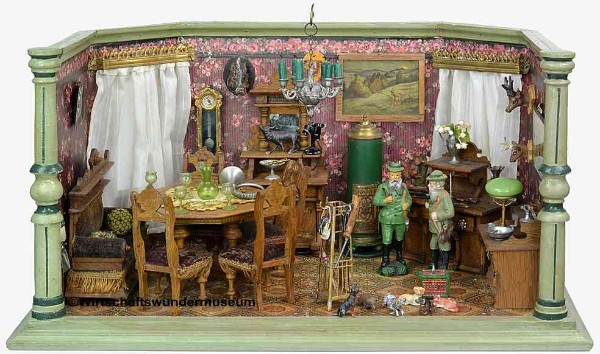
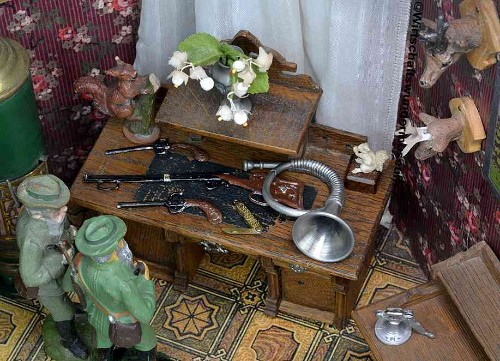
Whimsical "Hunter’s Parlor" (Jägerstube), c. 1900 Dimensions: 20.9 × 11.8 × 10.6 in (53 × 30 × 27 cm)
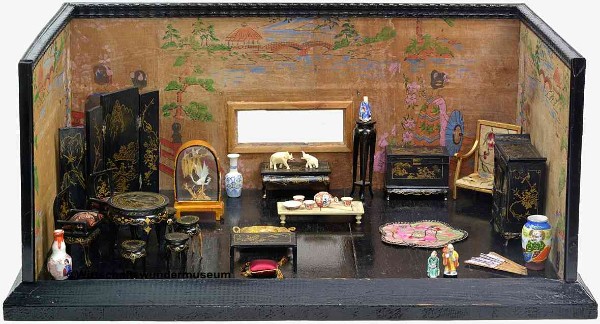
Dimensions: 23.6 × 15.7 × 10.6 in (60 × 40 × 27 cm)

East Asian-Style Dollhouse Room Box (c. 1900)

This dollhouse room box showcases the East Asian-inspired style that was highly fashionable around 1900.

Until the mid-19th century, Europe’s trade relations with China and Japan remained quite limited due to the isolationist policies of both nations. In the decades that followed, however, these markets were opened to the West—a shift forced in China’s case by the Second Opium War (the Anglo-French expedition). Through prominent displays at various World’s Fairs, Asian goods subsequently reached a broad public and quickly became highly sought-after consumer items across the Western world.

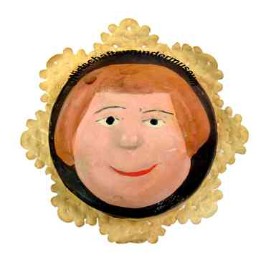
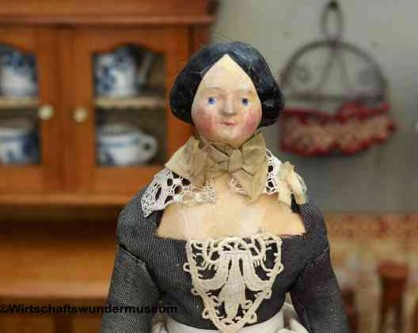
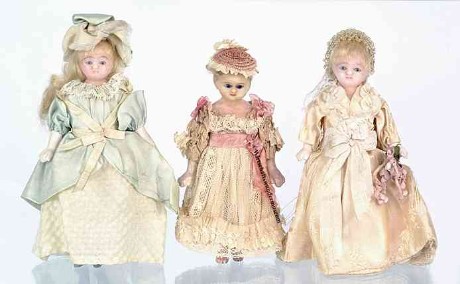
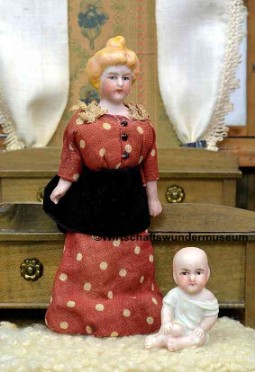
Wax-Headed Dollhouse Dolls (c. 1880) Height: approx. 5.9–6.7 in (15–17 cm)

Wax-Headed Dollhouse Dolls (c. 1880)

In the 19th century, dolls frequently featured wax faces because the material allowed for a remarkably lifelike, skin-like texture. Wax offered a subtle sheen similar to human skin, adapted well to the finest sculpted details, and appeared far more vibrant than hard ceramic or painted wood due to its slight translucency.

Additionally, wax holds pigment exceptionally well, giving cheeks and lips a highly realistic flush. Popularized by the fame of prominent waxworks exhibitions at the time, wax-headed dolls were considered the pinnacle of craftsmanship and elegance.

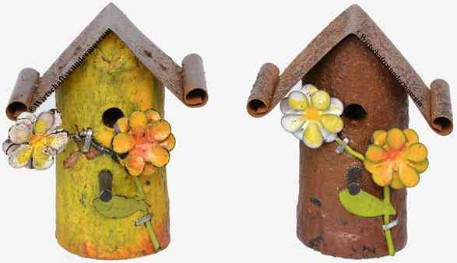
Vogelhäuschen aus Blech, Höhe 5,5 cm
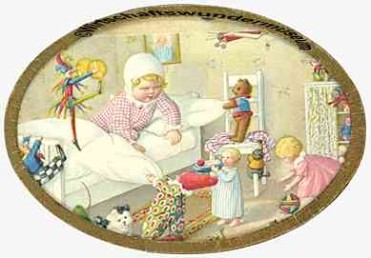
Wandbild für die Puppenstube, Durchmesser horizontal 9,5 cm
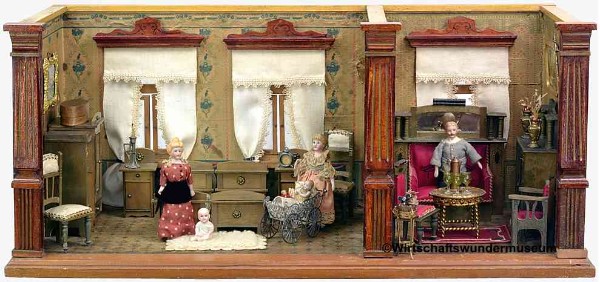
Dimensions: 26.8 × 10.2 × 11.8 in (68 × 26 × 30 cm)

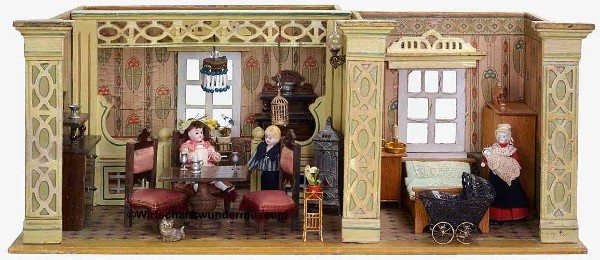
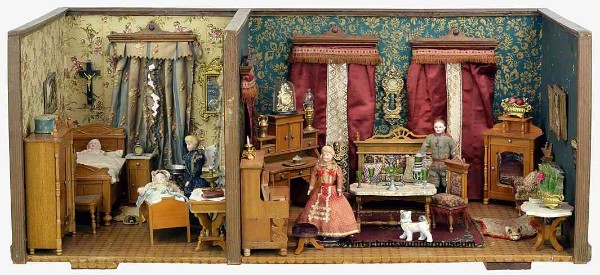
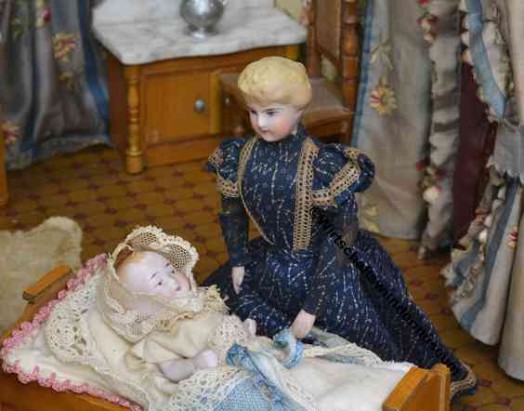
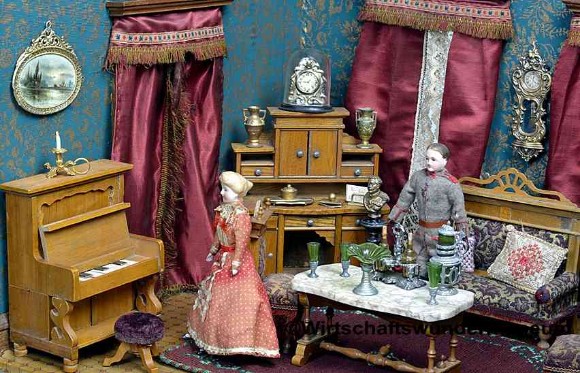
Stately Two-Room Dollhouse Box (c. 1880–1890)

Dating to around 1880–1890, this stately dollhouse room box vividly illustrates the spatial layout and social gender roles of an upper-middle-class household during the late Historicist period.

The larger room serves as a combined bedroom and nursery. The presence of a doll cradle and a child figure playing on the rug highlights the growing importance placed on a protected, nurtured childhood within 19th-century middle-class society.

In contrast to the private nature of the bedroom, the smaller room on the right is furnished as a parlor or gentleman’s study (Herrenzimmer). The sofa and the table set with delicate glassware reflect the period’s culture of social entertaining and intimate private retreats.

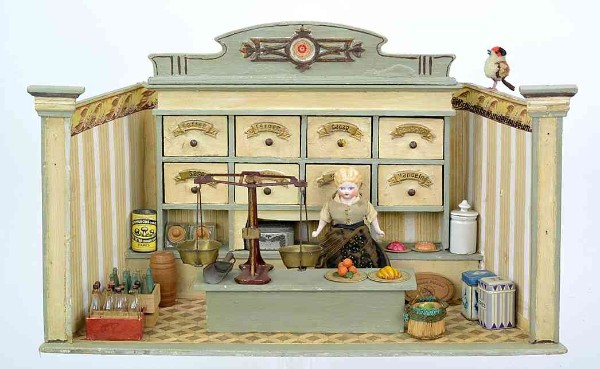
Antique Toy General Store with Curious Bird (Moritz Gottschalk, 1907) Dimensions: 20.5 × 9.1 × 12.6 in (52 × 23 × 32 cm)
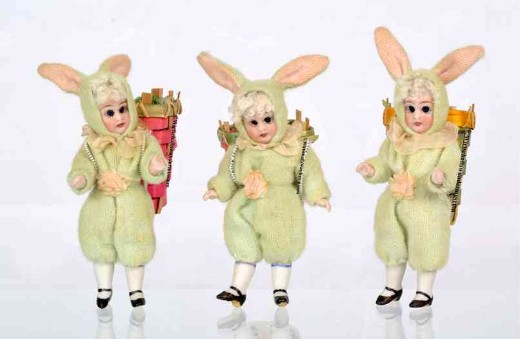
Height: approx. 3.5 in (9 cm, excluding ears 😉

Rabbit Children / Hasenkinder (c. 1910/1920), likely from Thuringia, Germany

These are all-bisque dolls dressed in rabbit costumes, featuring baskets on their backs, which were originally used as Easter decorations.

Dimensions: 22.8 × 13.4 × 9.8 in (58 × 34 × 25 cm)

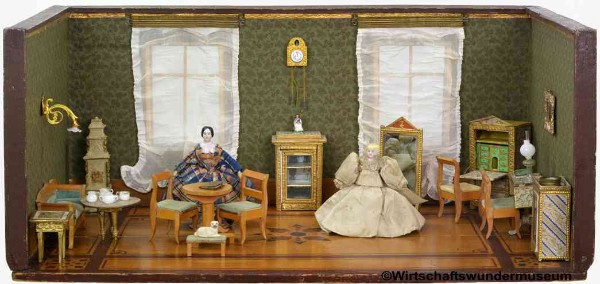
Single-Room Dollhouse Box (c. 1850–1860)

Dating to the late Biedermeier period (c. 1850–1860), this single-room dollhouse box features a middle-class parlor (Salon) that clearly illustrates the shift from the simple elegance of Biedermeier style to the emerging, decorative Historicism of the mid-19th century.

Socializing takes center stage in the room, anchored by a central seating area with a round table. To the left, a sofa, a small coffee table set with fine porcelain tableware, and an impressive multi-tiered tiled masonry stove complete the domestic idyll. The right side of the room is dedicated to private retreat and letter writing.

The intricately printed parquet floor with a central rosette pattern and the patterned olive-green wallpaper capture the period’s ideal of an intimate, harmonious living space. The two dolls wear characteristic mid-century fashion featuring dropped shoulders, wide sleeves, and voluminous crinoline skirts.
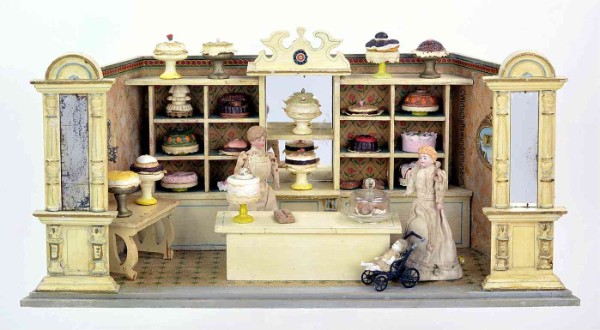
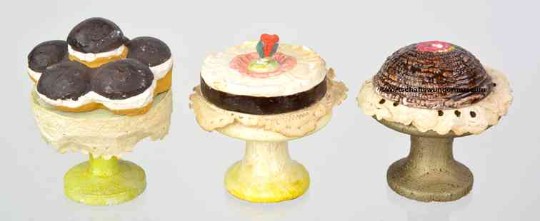
Kaufladen von Moritz Gottschalk, eingerichtet als Konditorei, Maße ca. 61 x 24 x 30 cm
Manufacturer: Albin Schönherr (c. 1920) Dimensions: 21.3 × 11.8 × 8.3 in (54 × 30 × 21 cm)